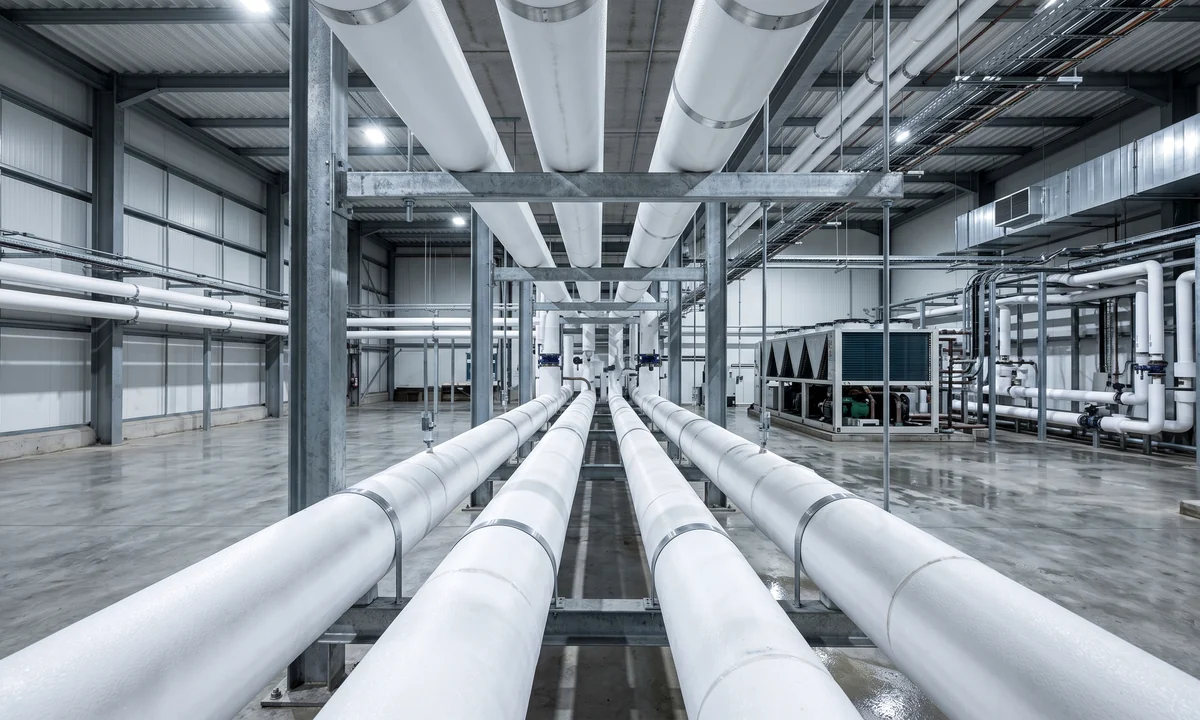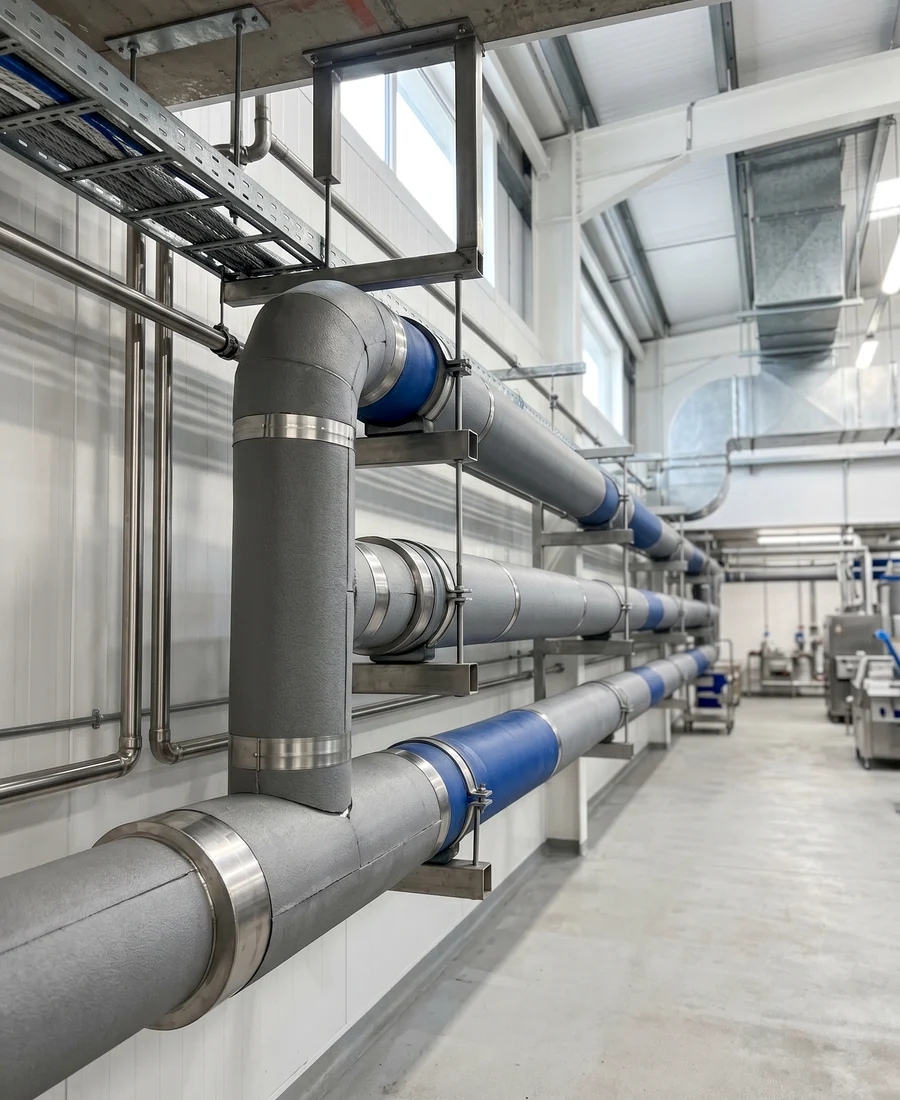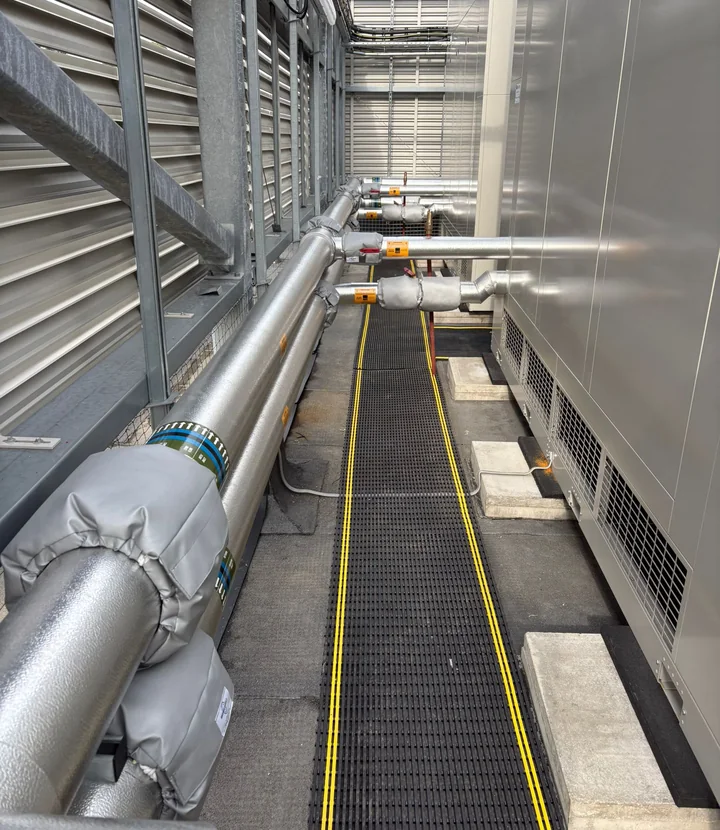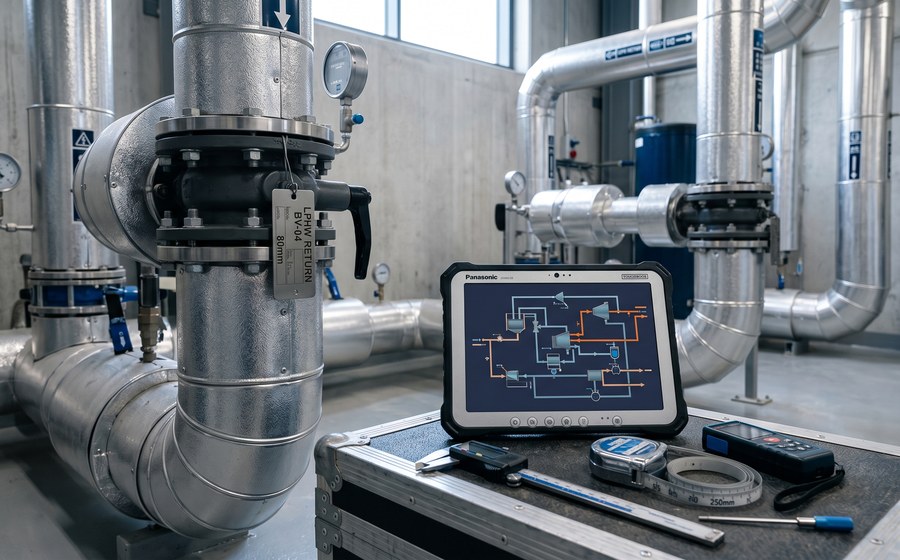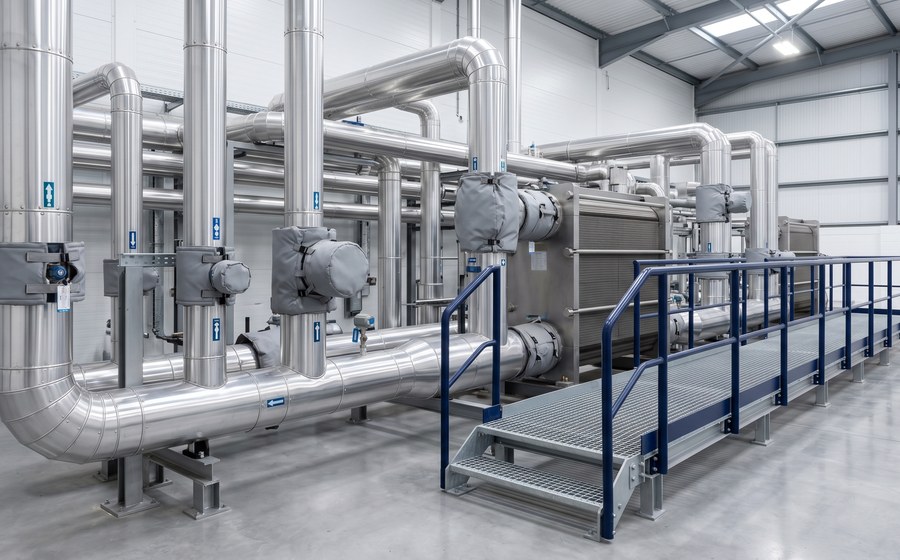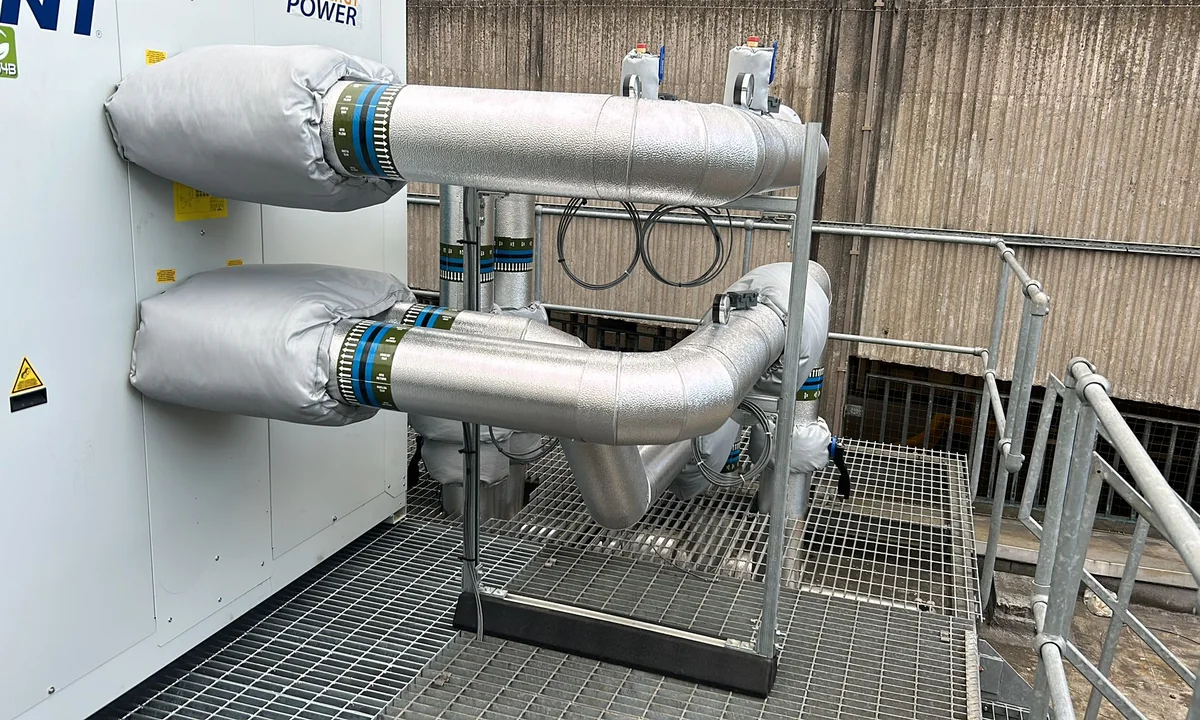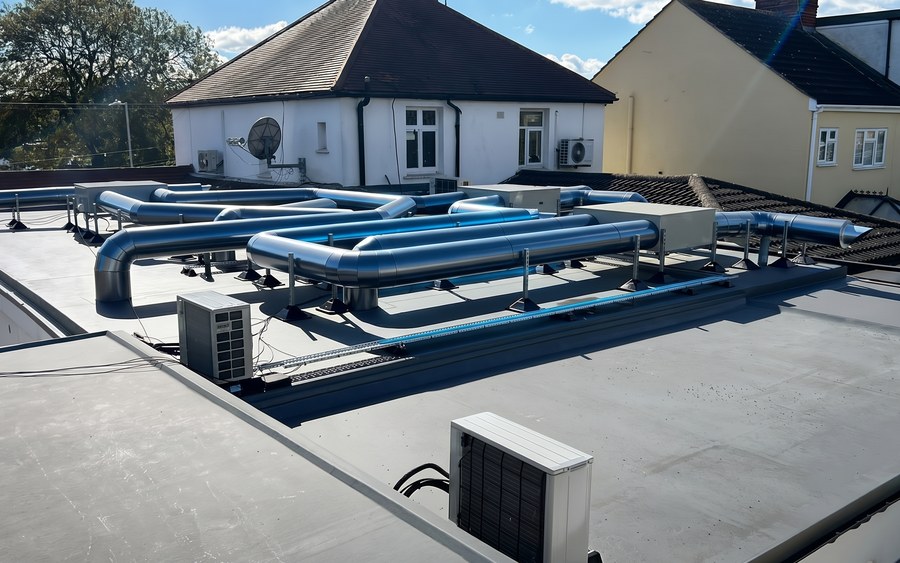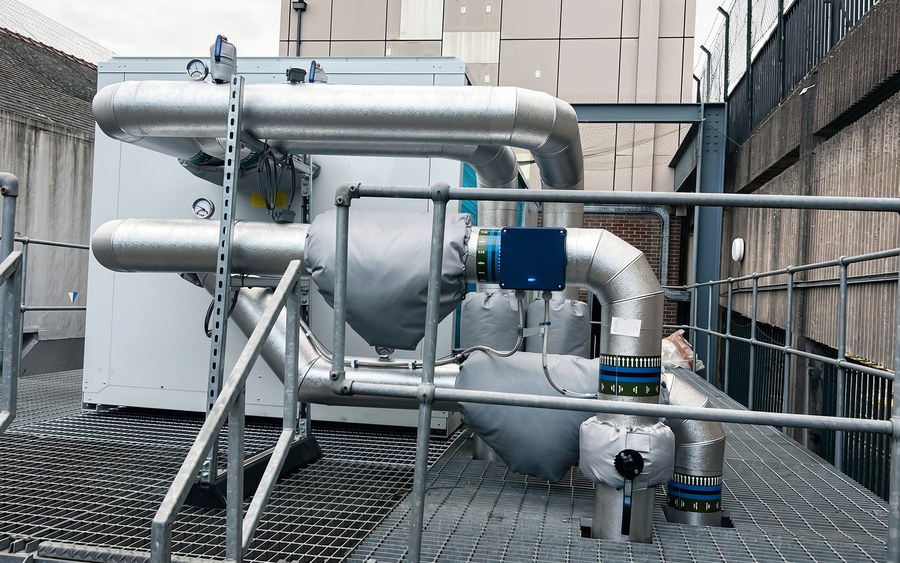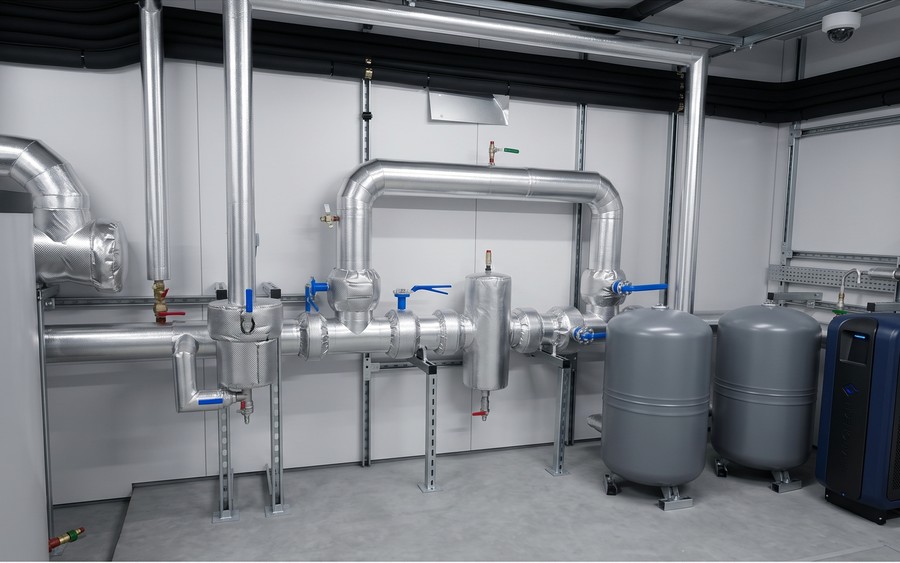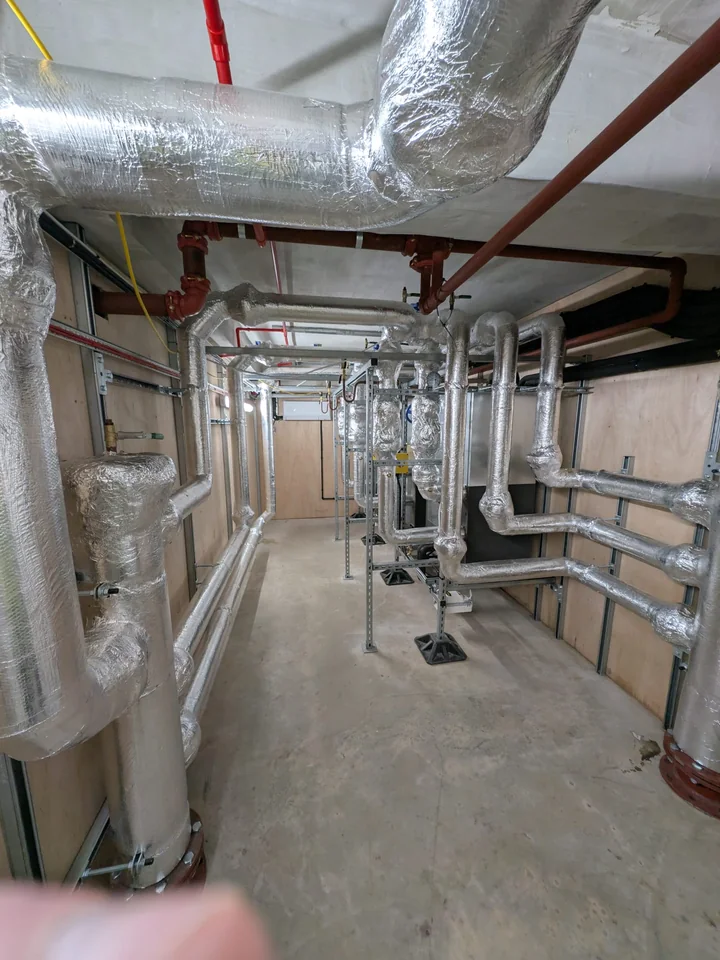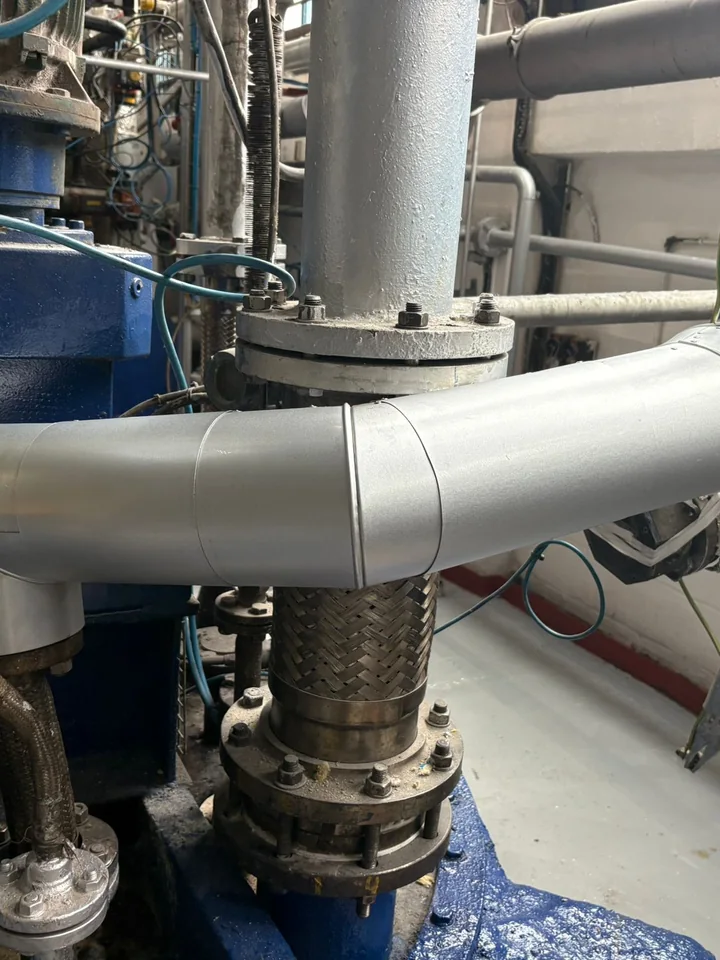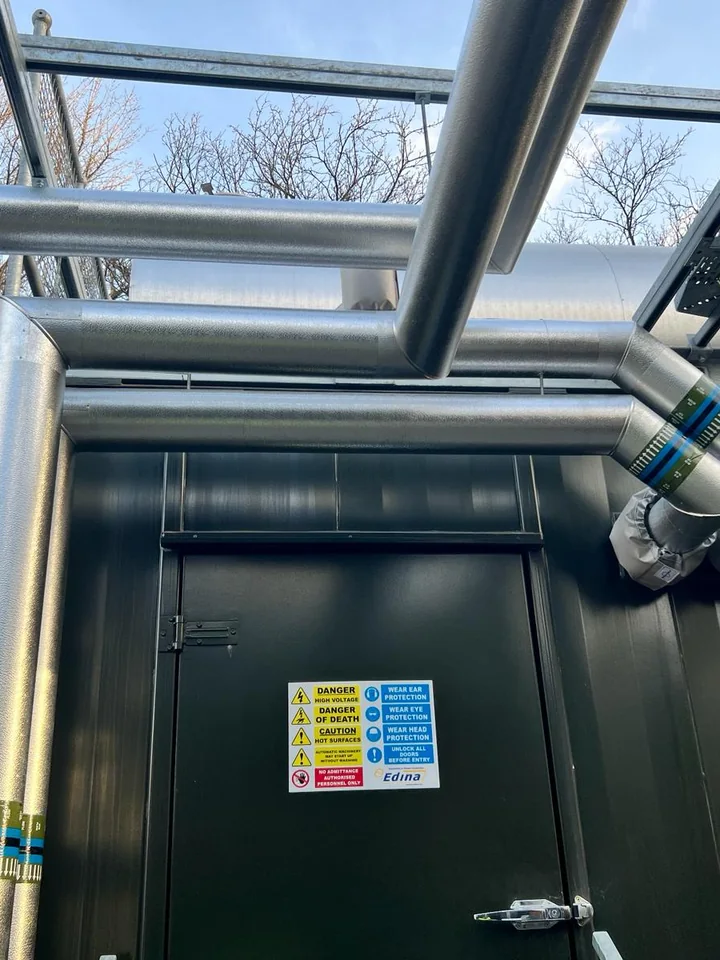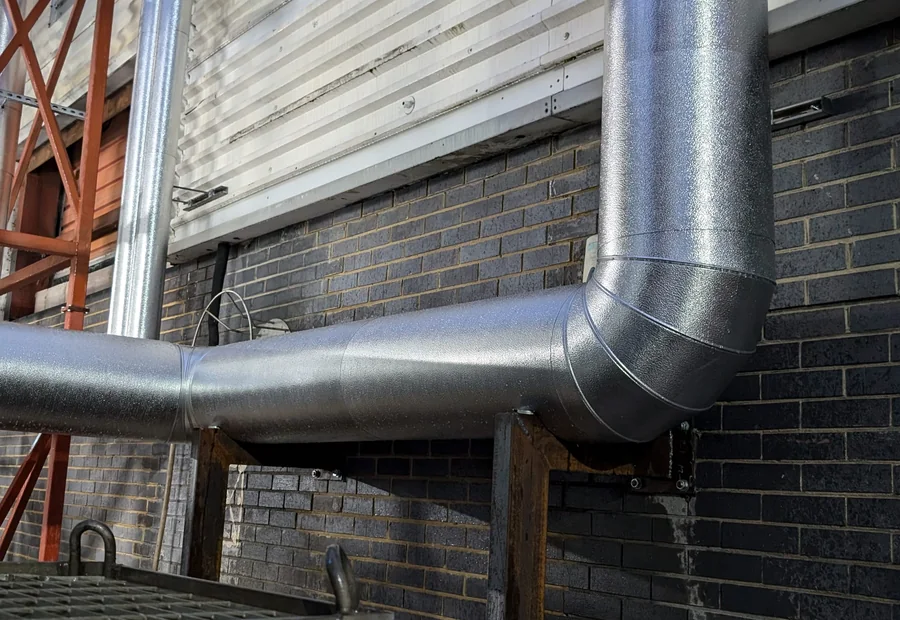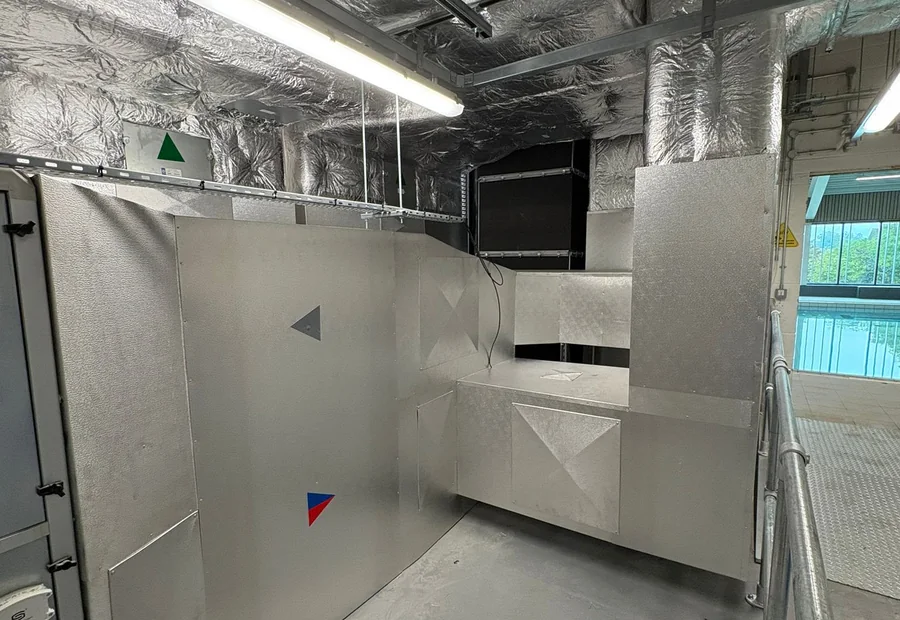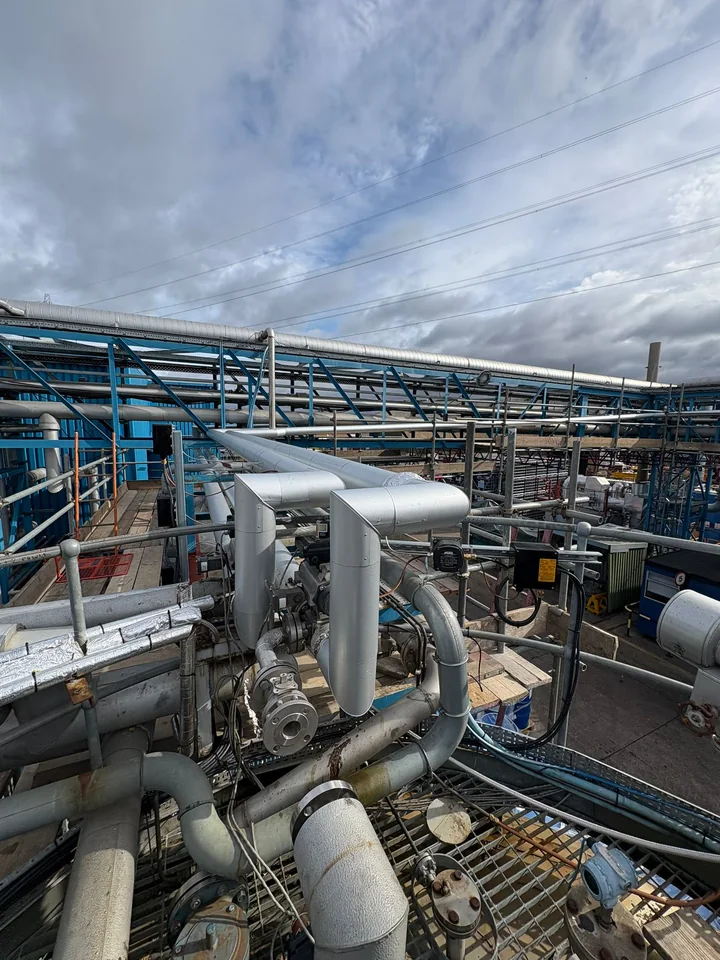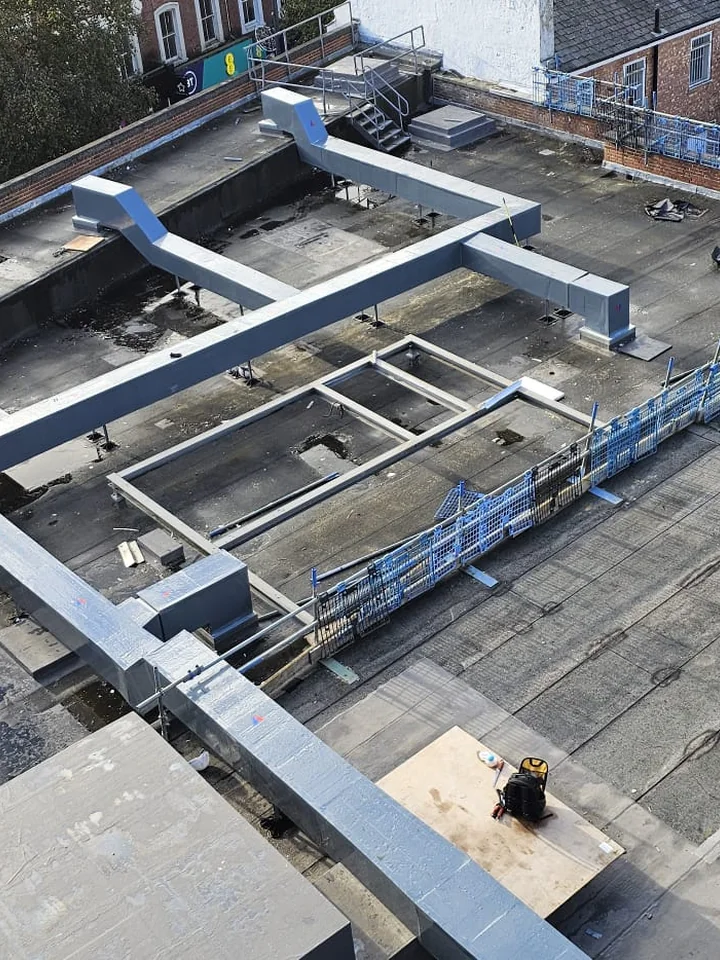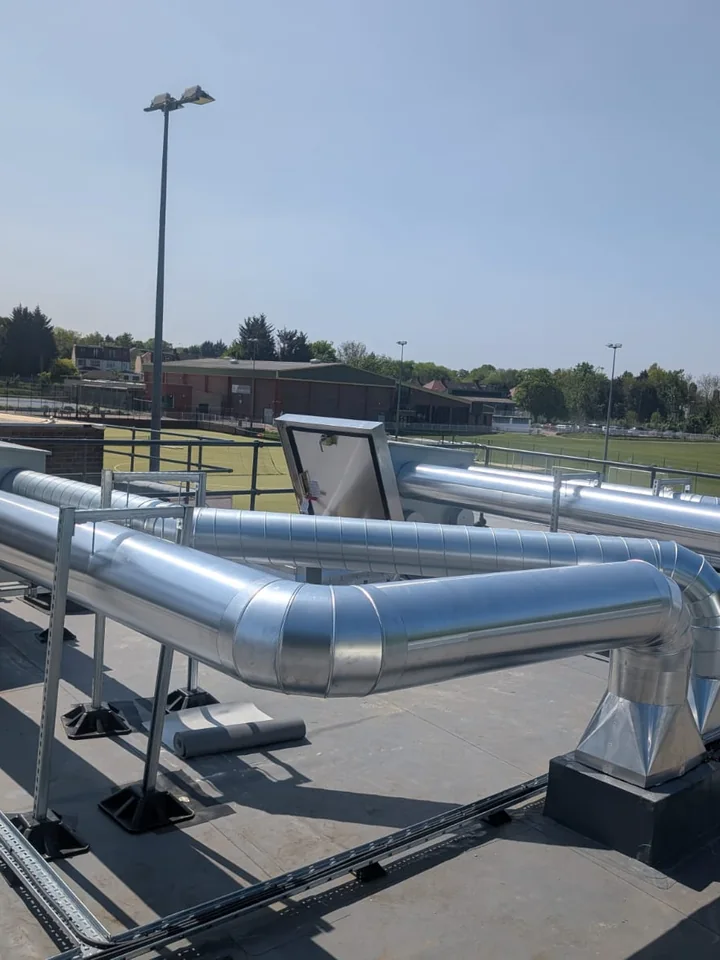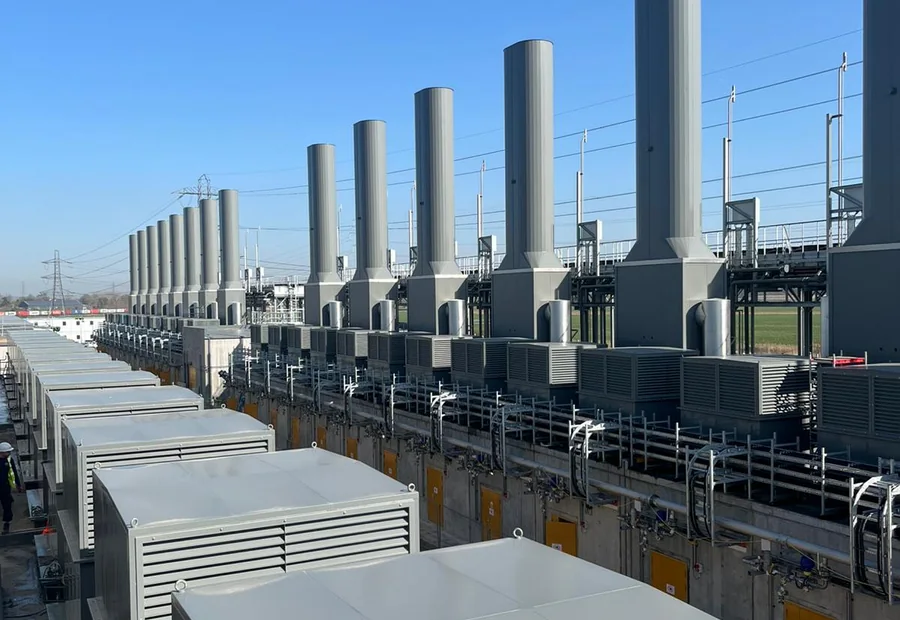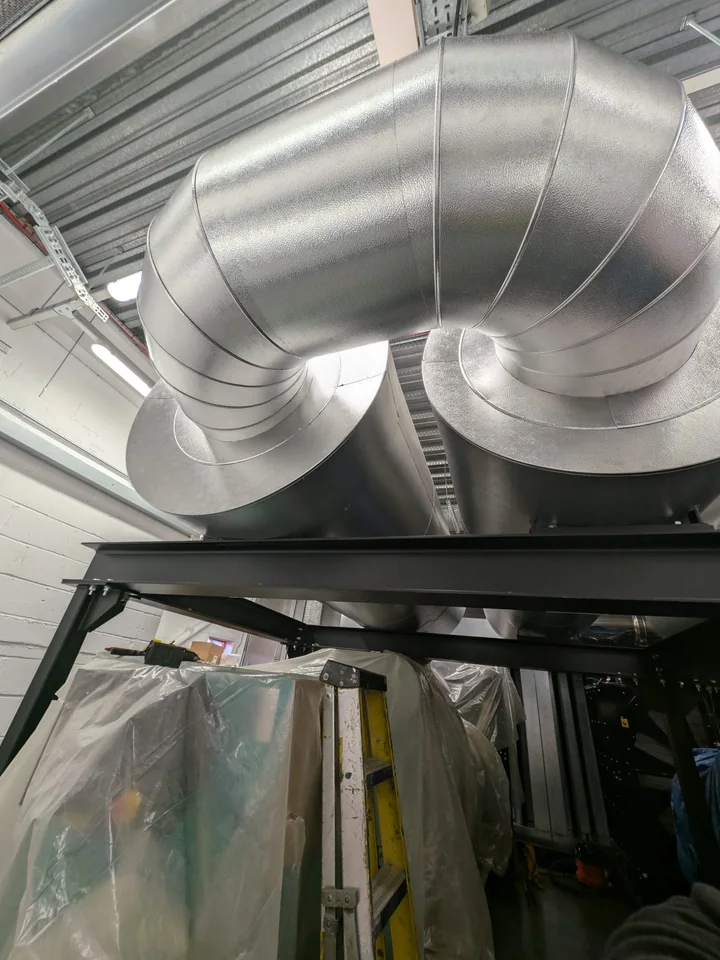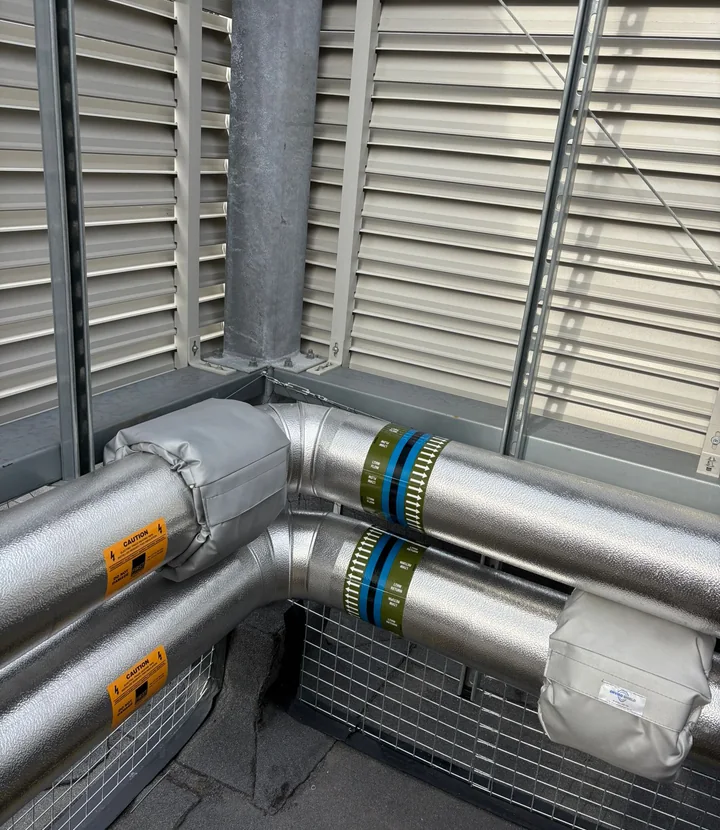
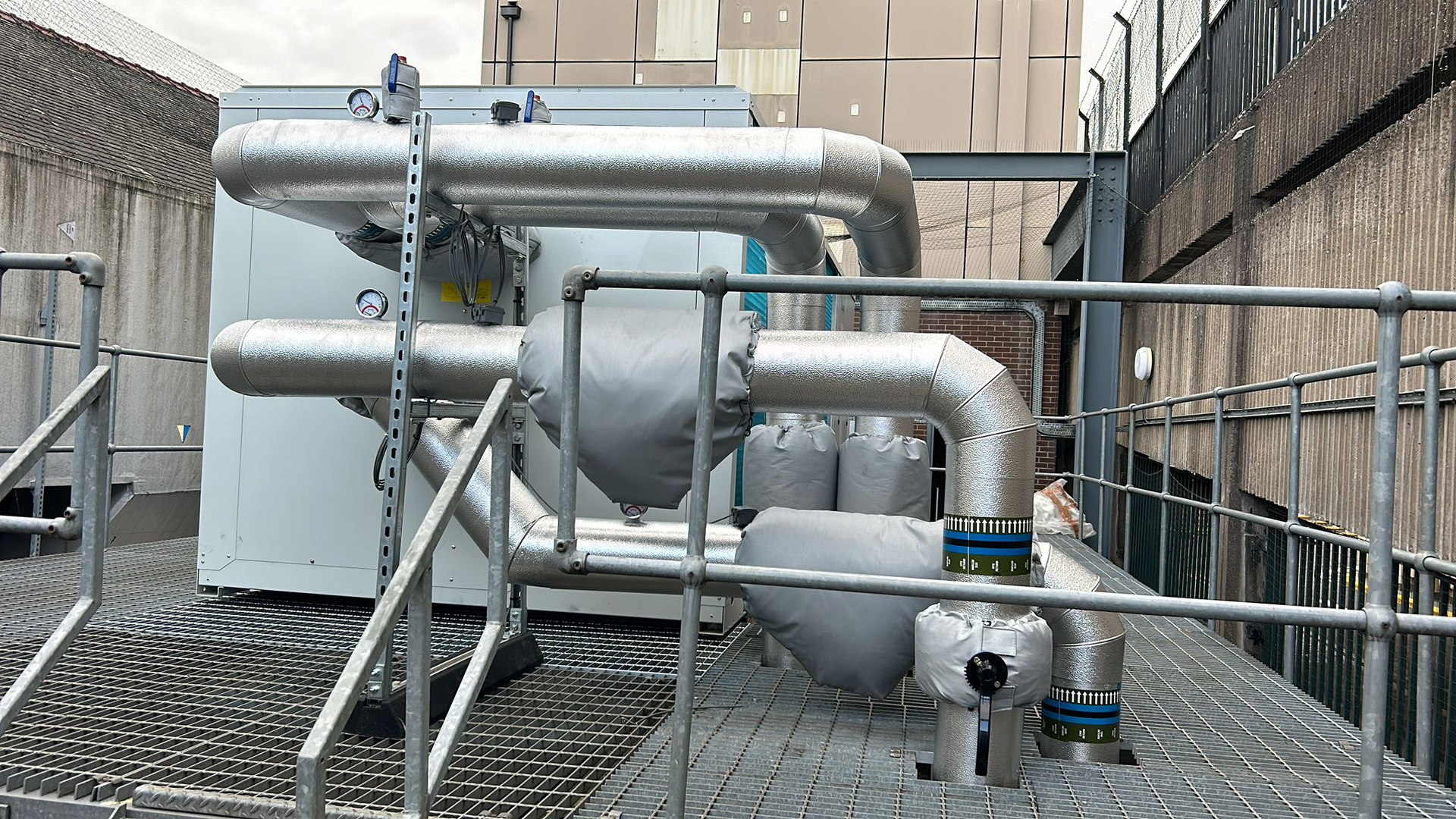

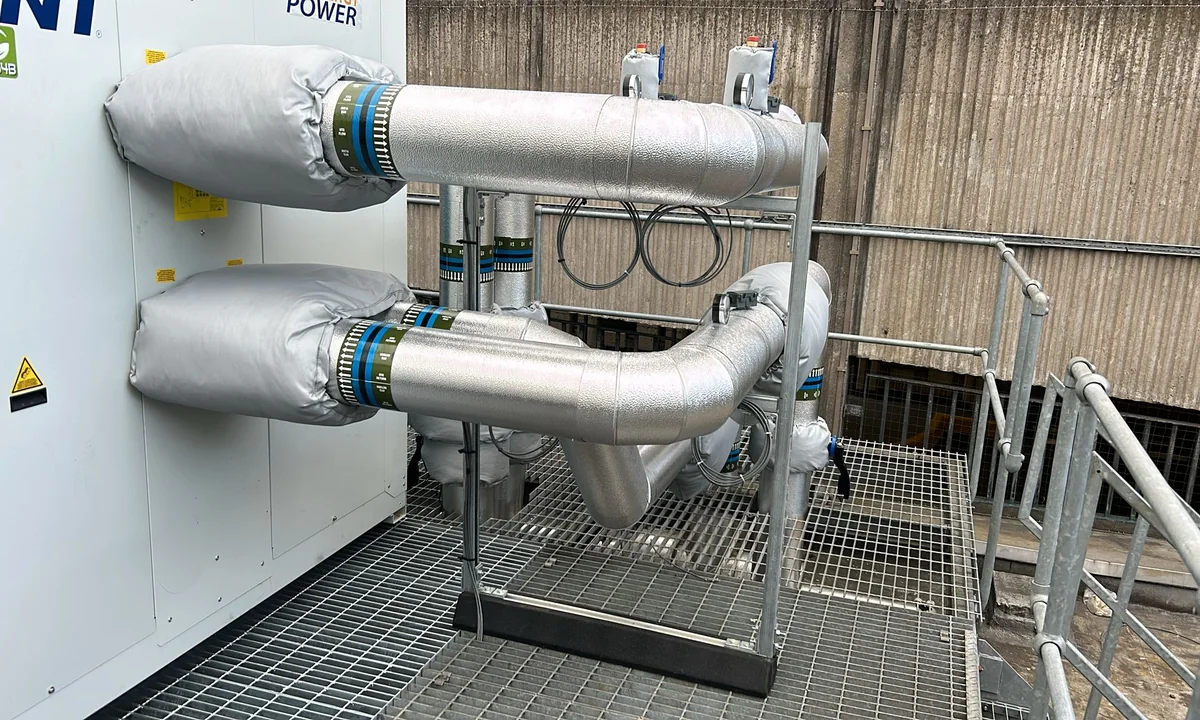
Enviroshield installs thermal insulation on commercial chilled-water pipework, cold ducts and associated plant. The brief covers heat gain, surface condensation, water-vapour resistance, protective finishes and maintenance access. It is an installed service for commercial and industrial projects.
Start with the service and surrounding conditions. Send drawings, sizes, temperatures and photographs, including any wet or damaged areas. Identify access restrictions and whether the work is a new installation, repair or removal and reinstatement. Mark unknown design conditions for review.
What needs to be specified for chilled pipe and duct insulation?
The survey brief should identify the cold service, its operating temperature and the surrounding conditions. Insulation thickness, resistance to water-vapour ingress and the detailing at joints and supports need to work as one system.
Armacell's ArmaFlex system brochure (2020, pages 3–4) illustrates support interfaces, compatible components and condensation control for that product family. It is an example, not a project specification or evidence of Enviroshield certification. Use current instructions for the actual system selected.
Send a complete installation brief
- Pipe or duct sizes, route lengths, fittings and the equipment served.
- Normal and minimum service temperatures, with ambient temperature and humidity information where available.
- Existing insulation material, thickness, condition and photographs of condensation or damage.
- Valve, damper, inspection-panel and support locations that need access or special detailing.
- Internal or external exposure, protective finish requirements, site access and shutdown or programme constraints.
Mark missing information as unknown so it can be included in the survey. For a pipework-specific project, see chilled water pipe insulation; for moisture-related detailing, see condensation-control insulation. Use request a chilled-insulation installation quote to send the drawings or photographs.
Specialist Chilled Services Planned Around Condensation Risk
Specify the insulation and outer protection as separate parts of one system. The finish must suit exposure and maintenance, while the cold-service insulation and vapour-resistant details must suit the design conditions.
Condensation Design Inputs
Provide service temperature, ambient temperature and relative humidity where known. Record seasonal or local variations that the designer needs to consider.
Joints, Supports & Penetrations
Include fittings, supports, hangers and insulation terminations in the scope. Agree how the specified insulation and water-vapour resistance continue across each interface.
Damage & Moisture Survey
Mark condensation, wet insulation, open seams and damaged finishes. The cause and extent need checking before agreeing a local patch or wider replacement.
Access & Reinstatement
Identify valves, duct access panels and equipment opened for maintenance. Specify the cold-service insulation and vapour-resistant details that must be restored afterwards.
What Specialist Chilled Services Can Cover
Separate pipework, ductwork and equipment in the enquiry. Each route needs dimensions, operating conditions, finish requirements and an agreed access method.
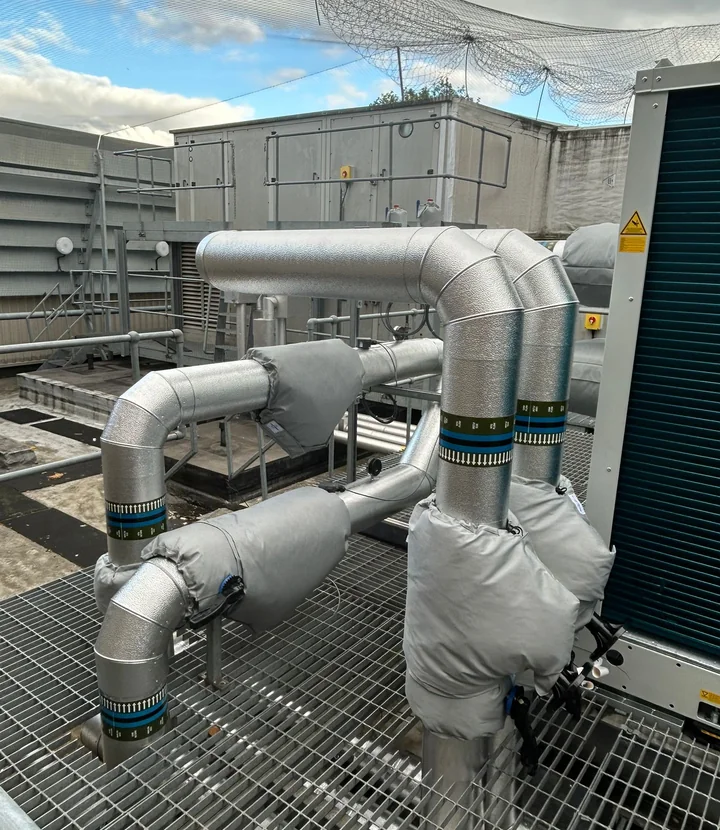
Chilled-Water Pipework
Give straight lengths, outside diameters, fittings, valves and support details. Include existing insulation condition and any planned removal or reinstatement.
Cold Ducts & Air Handling
Give duct dimensions, route lengths, air temperatures and surrounding conditions. Mark access doors, dampers, hangers and air-handling connections.
Protective Finishes
State indoor or outdoor exposure, cleaning requirements and damage risks. An outer covering alone does not establish the condensation performance of the complete system.
Inspection & Handover
Agree inspection of joints and terminations, finish checks, photographs and open actions. Record who accepts the insulation work and who controls return to service.