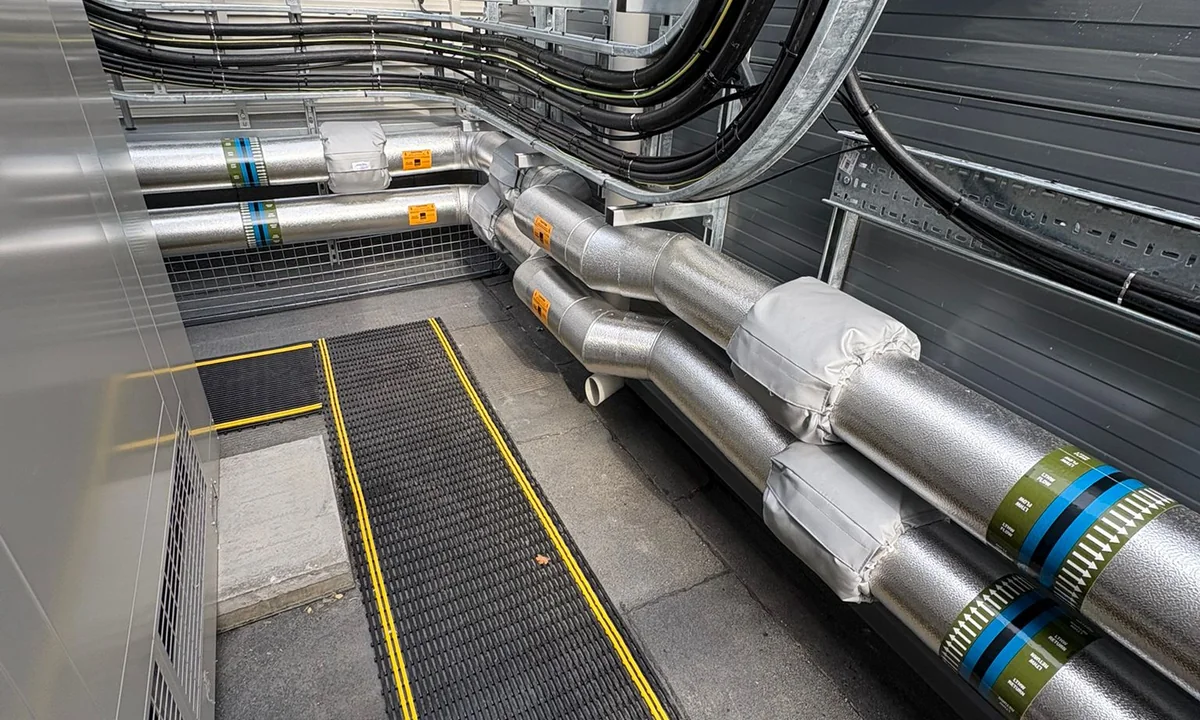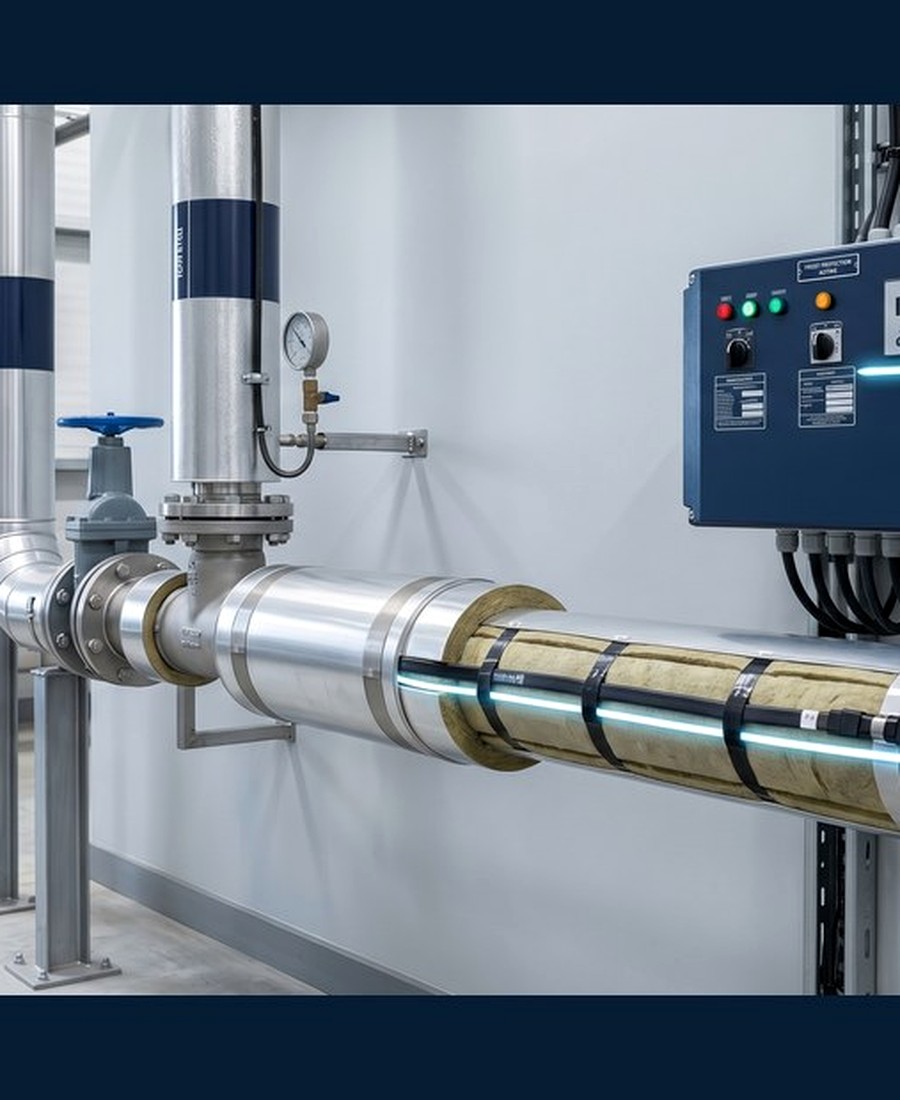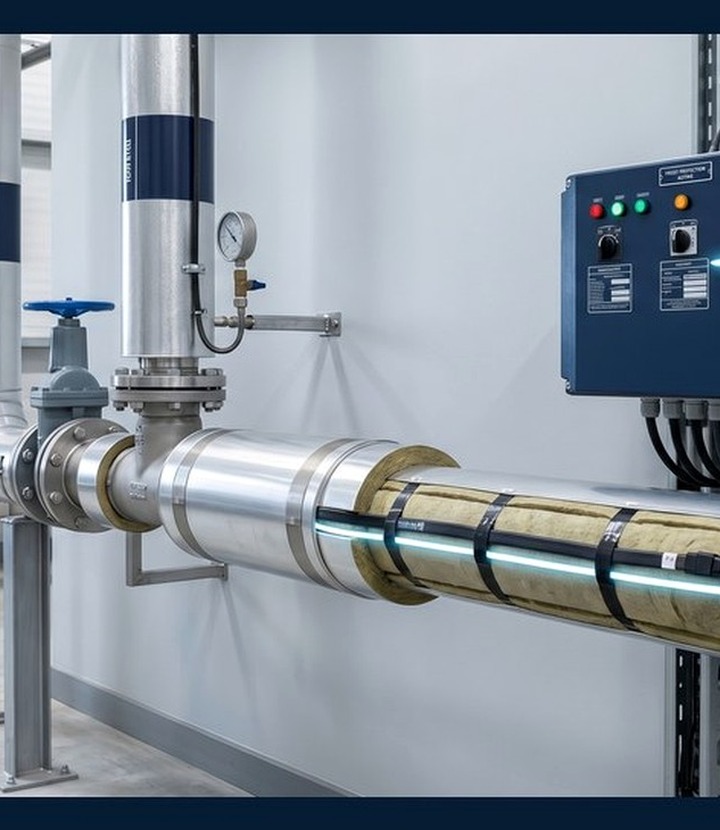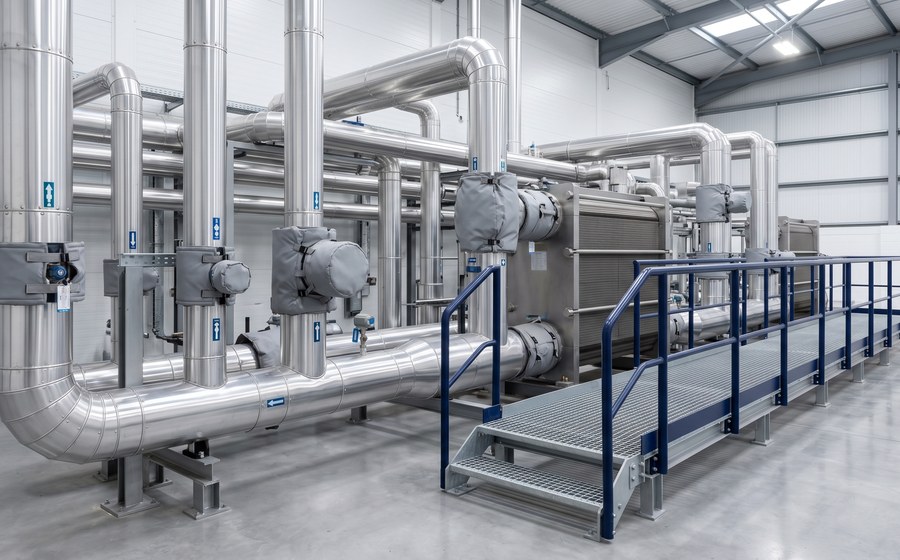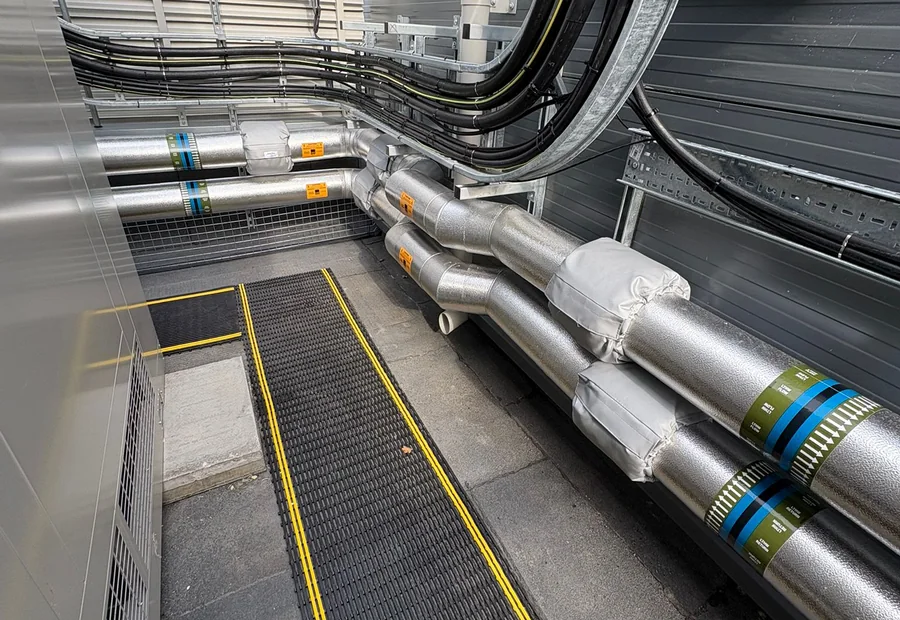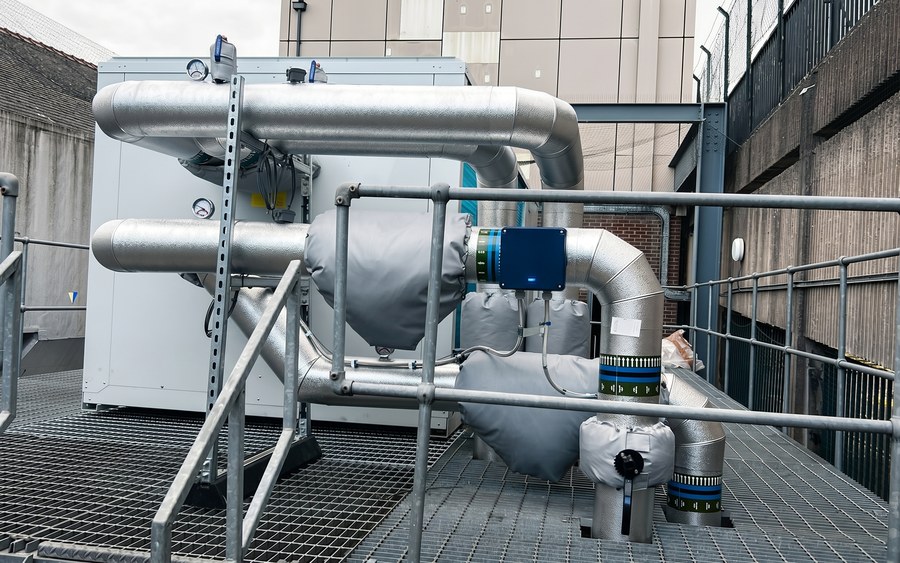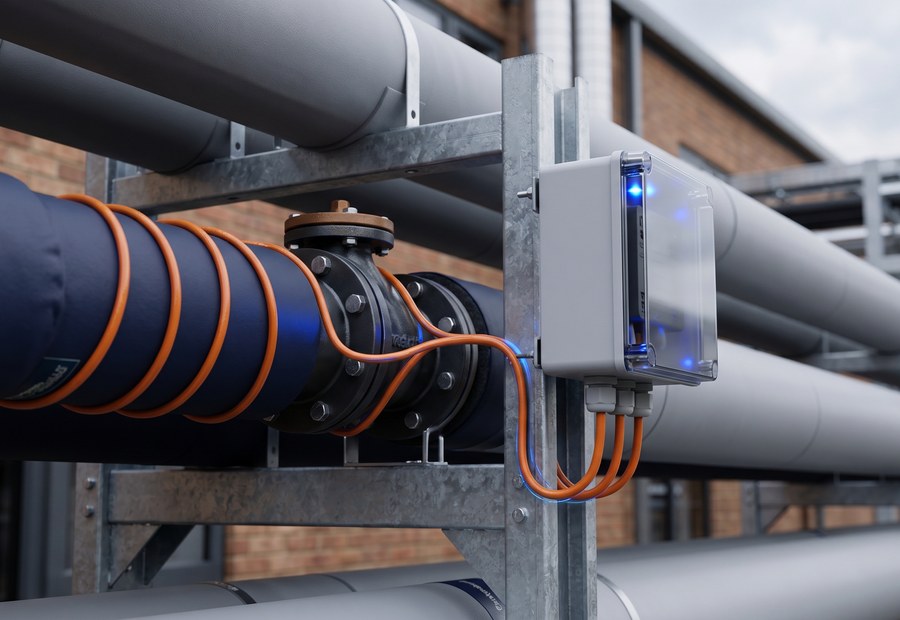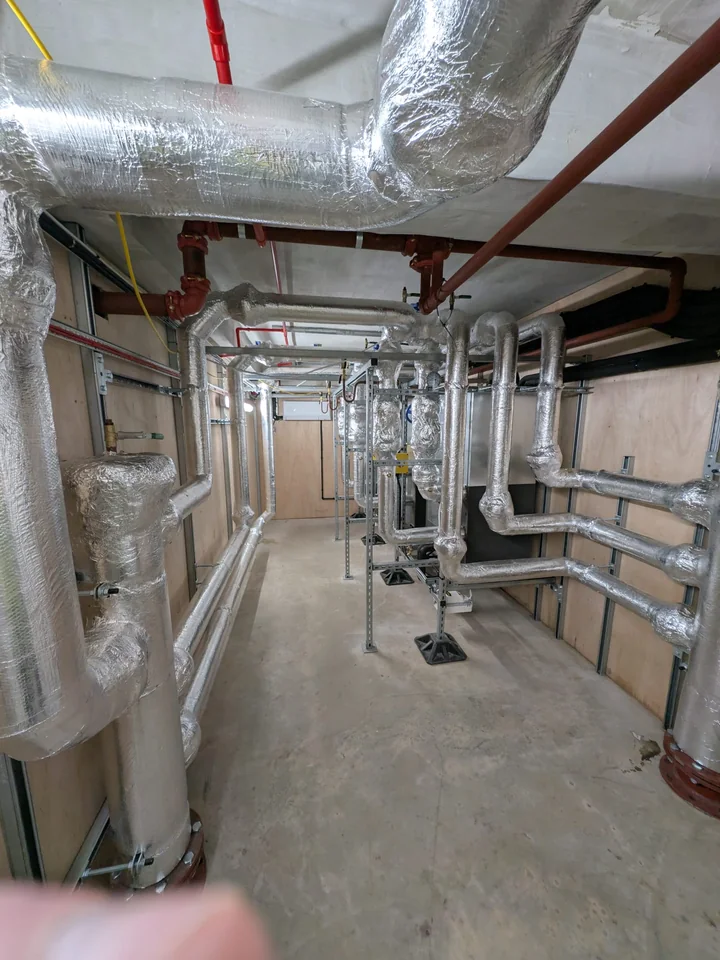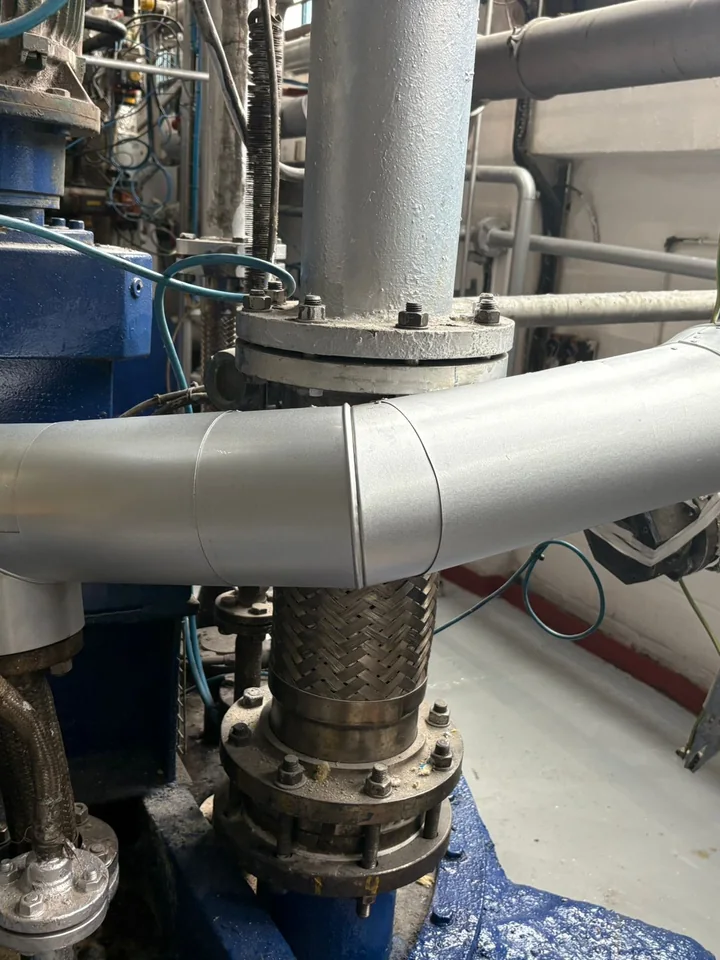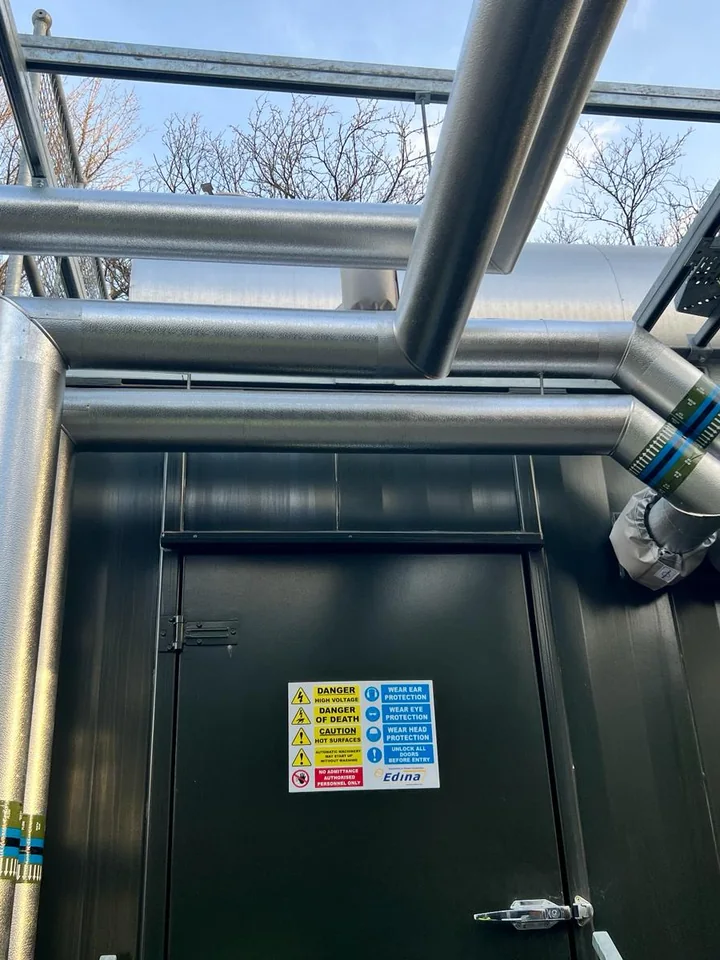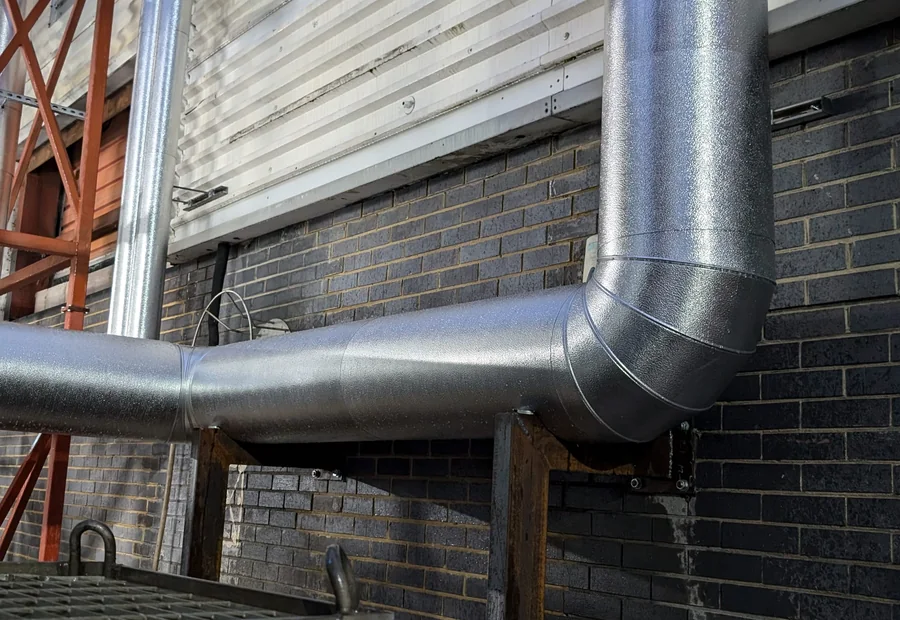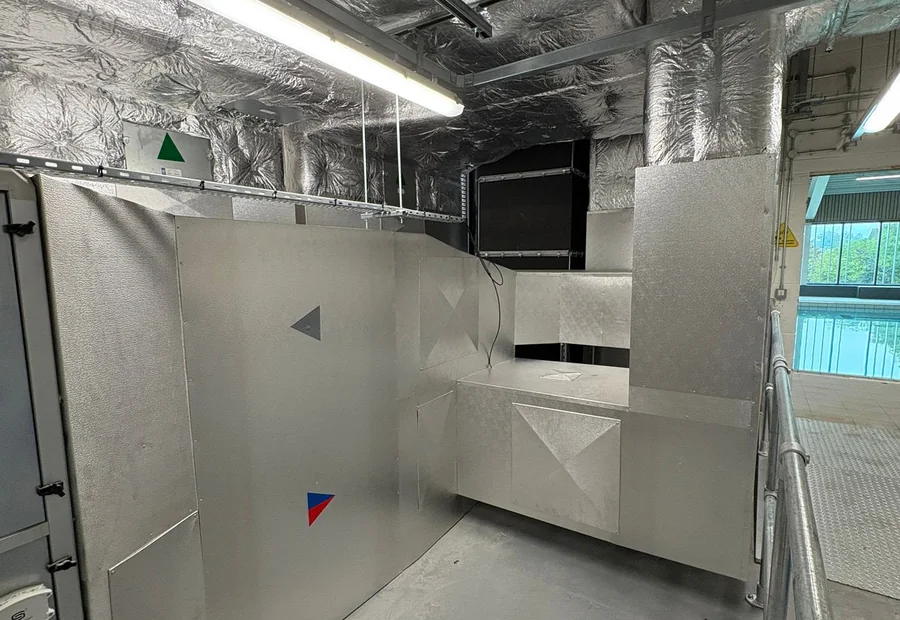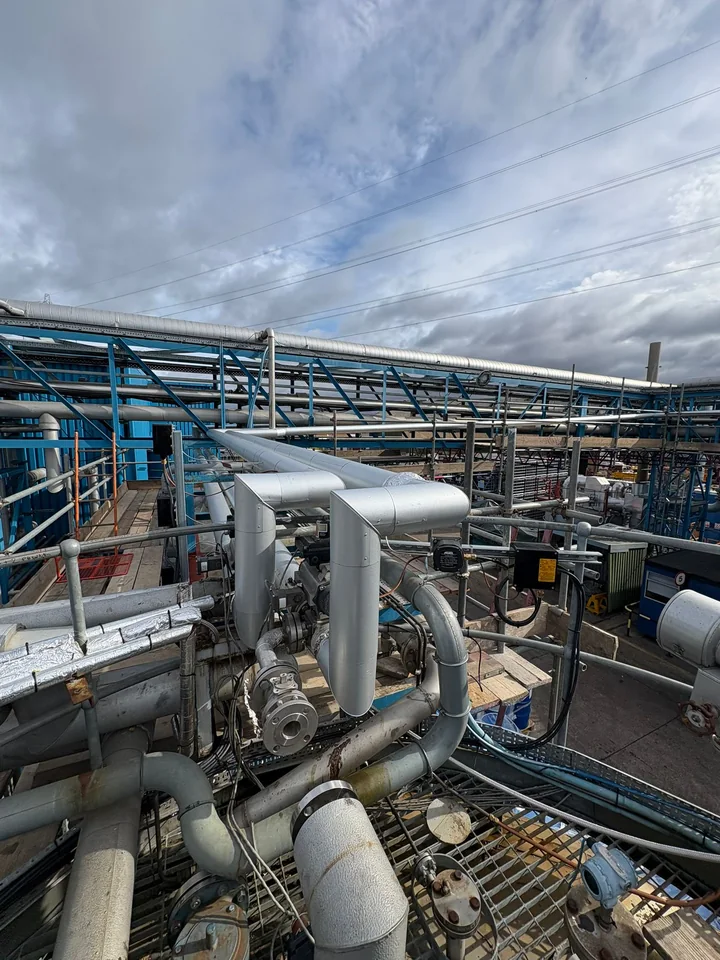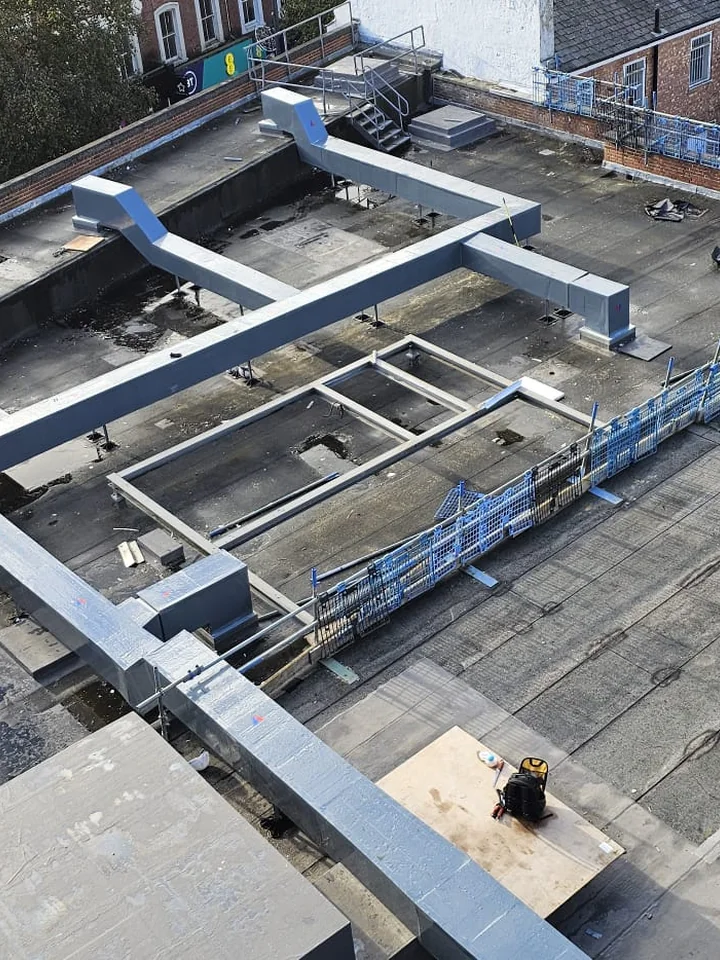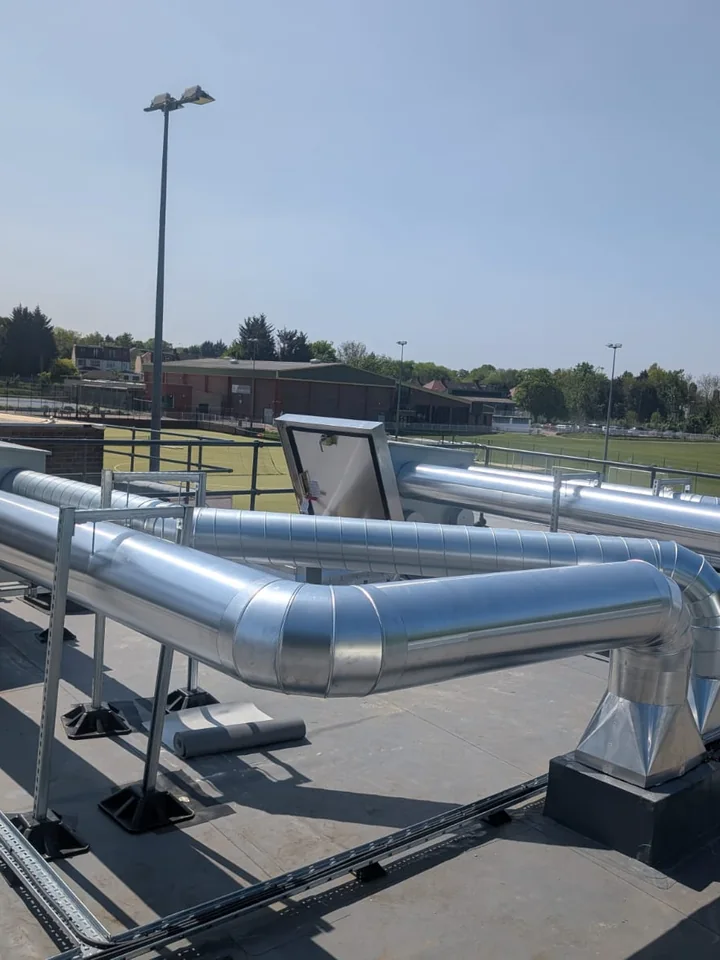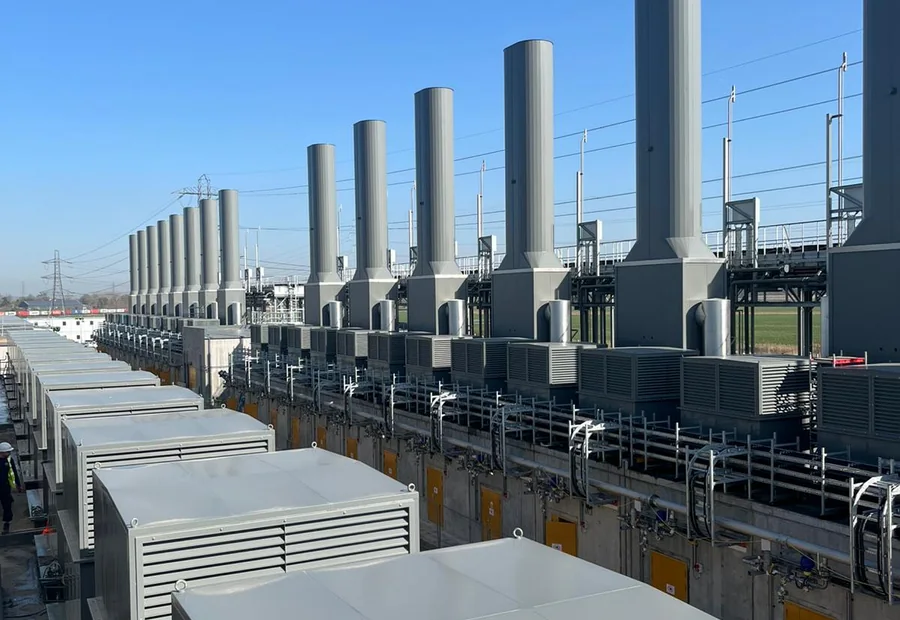
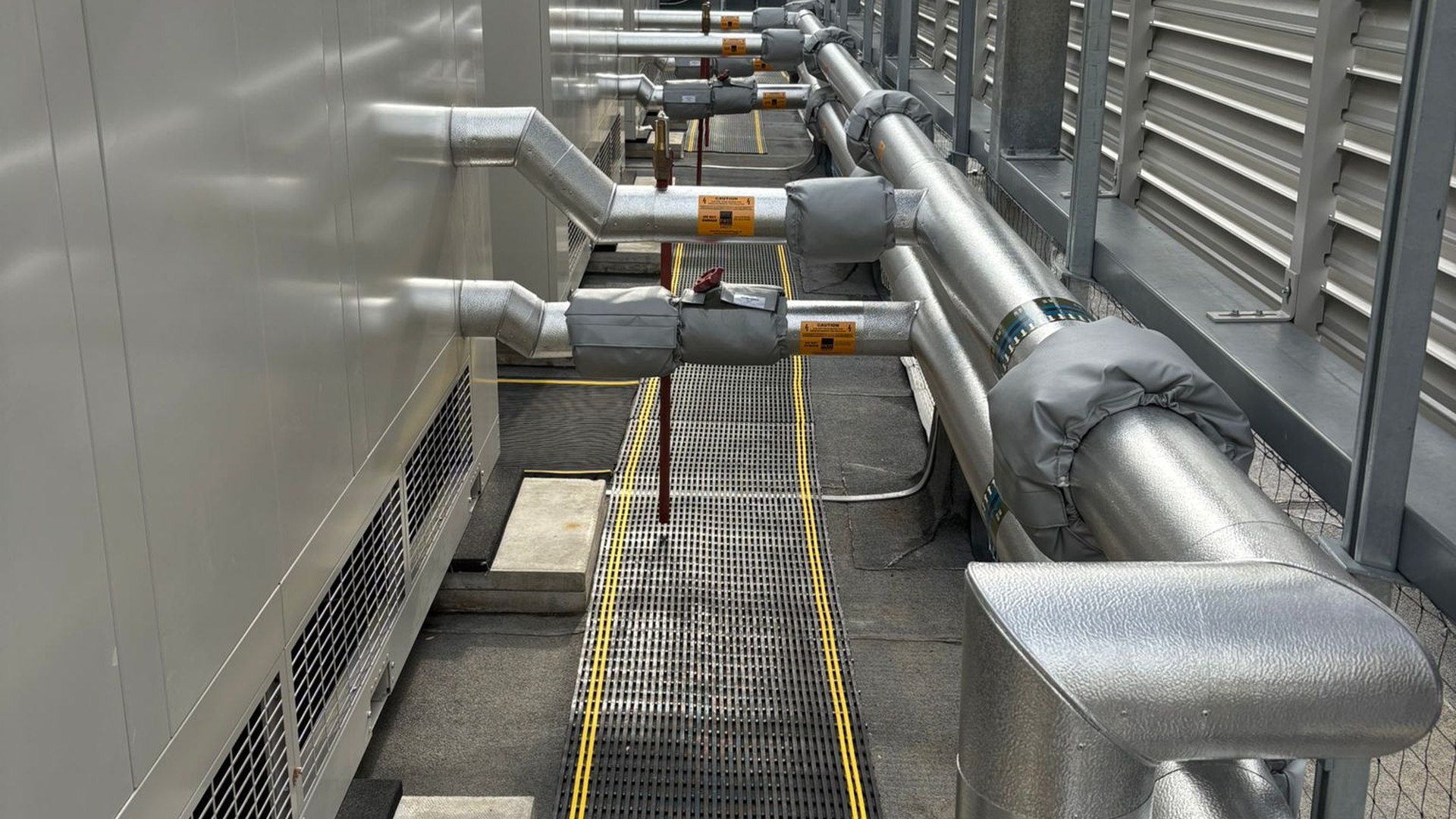

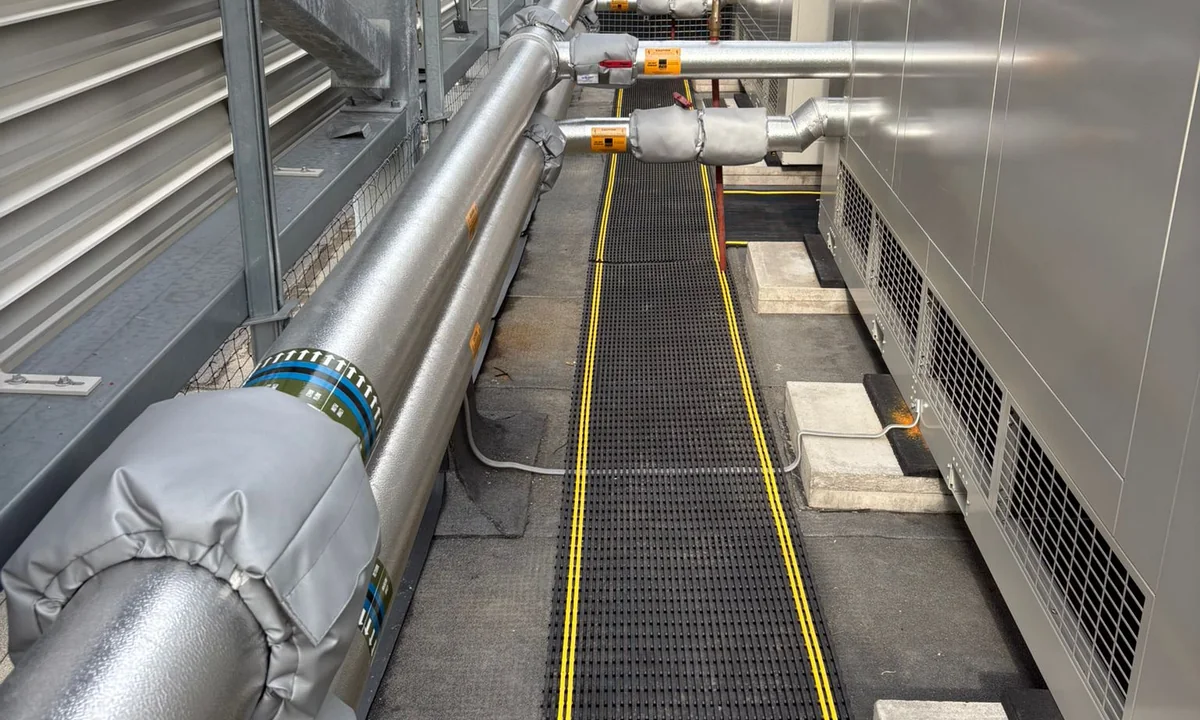
Commercial and industrial trace heating installation for frost protection, temperature maintenance and exposed pipework, coordinated with insulation and controls across UK project sites.
Trace heating is planned around the service route, the exposure, the controls, the surrounding insulation and the final handover condition, not treated as a bolt-on after the route is already fixed.
Trace Heating Planned Around the Real Route
Enviroshield looks at exposure, service duty, controls, insulation and handover detail before recommending the right trace heating route.
Frost Protection
Protect exposed services that are vulnerable to freezing, shutdowns and winter call-backs.
Temperature Maintenance
Maintain service temperature where long runs and occupancy demands need stable delivery.
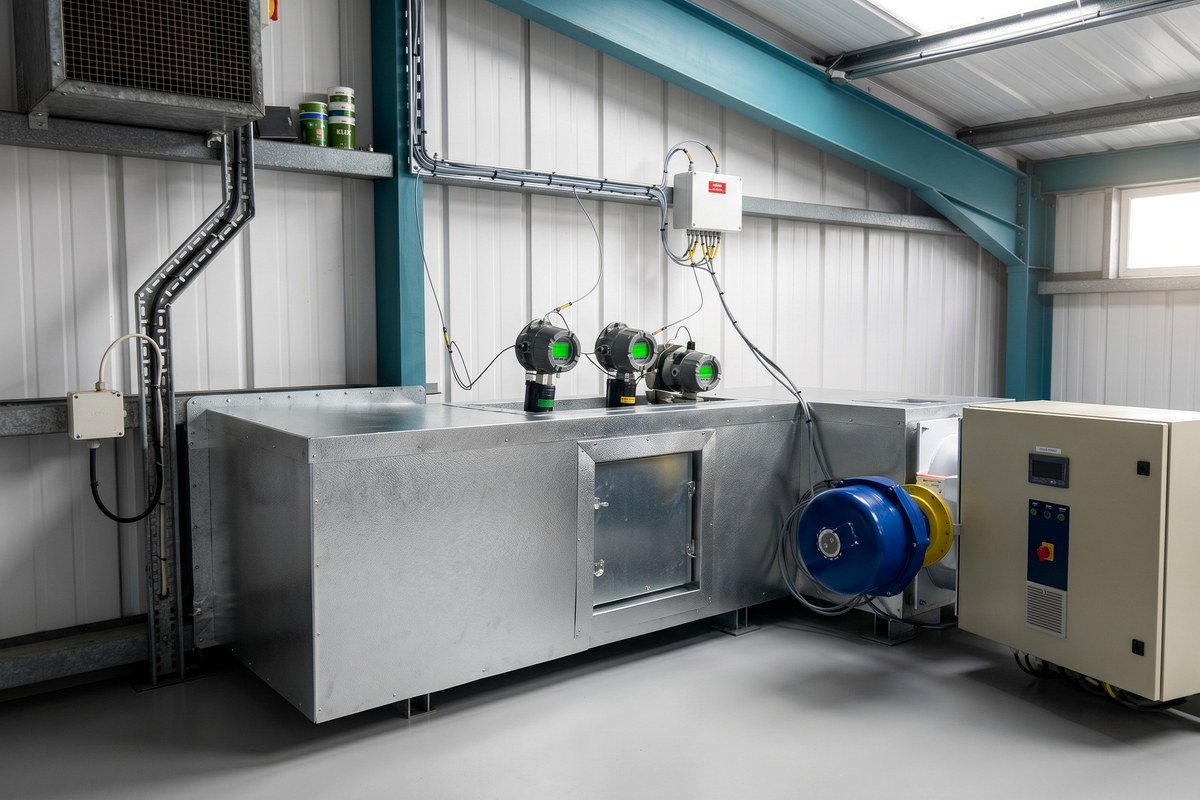
Controls, Monitoring & ATEX
Plan control panels, sensors, isolation and ATEX-rated component requirements around chemical, petrochemical, MOD and other hazardous-area duties.
External Route Coordination
Coordinate trace heating with insulation, cladding and weather-exposed service finishes.
Where Enviroshield Supports Trace Heating
Trace heating is normally planned around the parts of the service route where exposure, continuity, route length or winter pressure create the biggest operational risk.
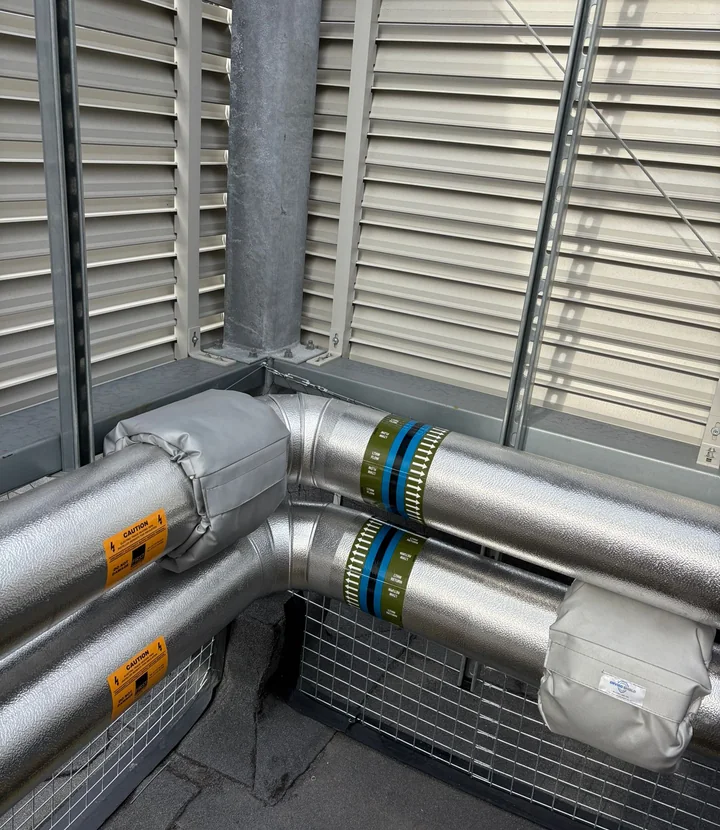
External Pipework & Valves
Roof-level, gantry and perimeter service routes where weather exposure creates freeze risk or unreliable operation.
Hot Water Continuity
Long domestic hot water routes and return lines where temperature drop becomes an operational issue.
Sprinkler & Fire-Related Pipework
Exposed sprinkler routes coordinated with the wider fire-system team and site requirements.
Gutters, Downpipes & Drainage
Roof drainage routes where ice build-up or frozen discharge points can create overflow risk.
Existing Trace Heating: Records and Maintenance
For an existing installation, see trace heating surveys and maintenance. Share circuit records and known faults if available. Electrical inspection and testing need appropriately competent people; the HSE's electrical maintenance guidance explains the competence requirement.
Preparing an existing system for winter? Our pre-winter trace-heating checks guide covers circuit records, insulation condition and the brief for competent inspection and testing. Checks should follow the installed equipment's instructions.