

What should be checked before winter?
Start with the circuit records and the purpose of the system. Arrange an appropriate review of visible condition, insulation and controls, followed by the electrical inspection and testing required for the installed equipment. Keep a circuit-by-circuit record of findings and remedial work. Switching a system on is not, by itself, a documented assessment of its condition.
Identify the system before planning the checks
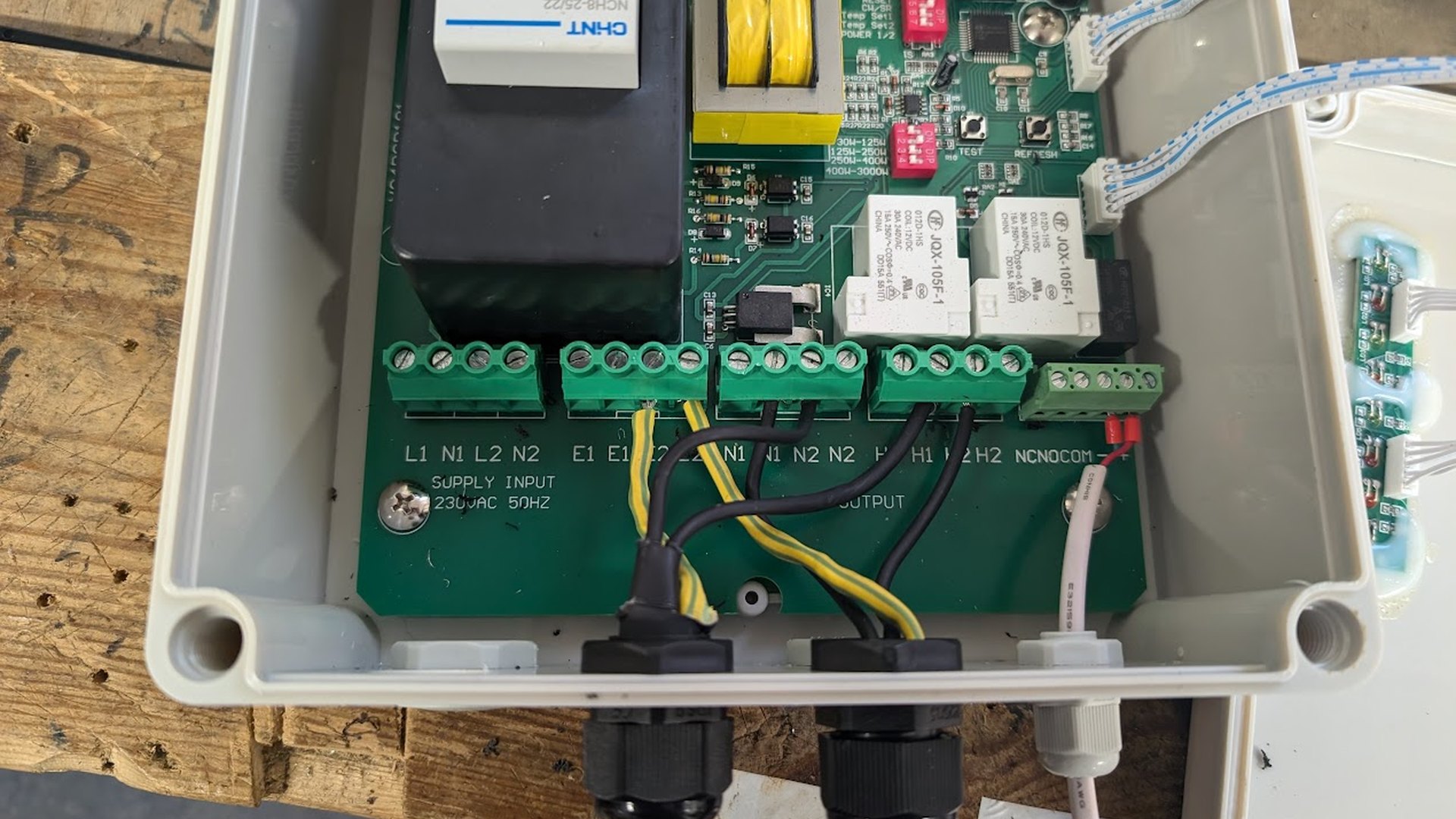
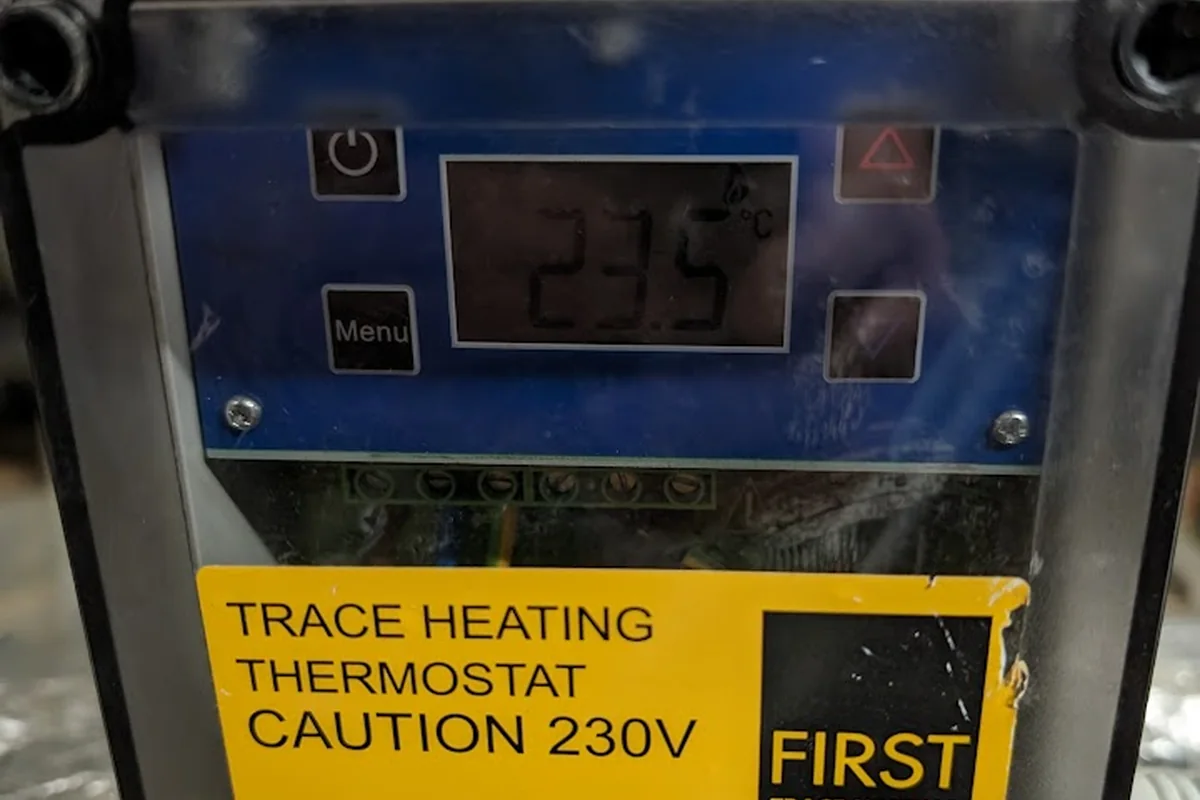
A practical inspection brief should identify the protected service, pipe route, cable manufacturer and type, control arrangement and the circuits involved. Separate frost protection from temperature-maintenance duties. Gather commissioning records, previous test results, fault history and details of pipe repairs or alterations. If records are incomplete, state that at the start so the scope can allow for identification and investigation.
Include the insulation and outer protection
Chemelex's RAYCHEM manual says complete, dry pipe insulation is needed to maintain the correct temperature and recommends periodic checks for physical damage to exposed heating cable and insulation. Treat the cable, insulation and protective finish as a coordinated system. Record visible damaged or missing finishes and areas requiring closer assessment. Source: Chemelex RAYCHEM installation and maintenance manual, section 9.
Keep electrical work with competent people
HSE states that people working on electrical installations must have competence appropriate to the task. Its guidance also calls for planned work and secure isolation of energy sources where required. Electrical testing and fault investigation should therefore be specified and undertaken by a competent person with the relevant system information. Source: HSE, work on electrical equipment and installations.
Use the installed system's instructions
The RAYCHEM manual includes insulation-resistance testing, checks of electrical protection and temperature controls, and periodic circuit records. It recommends pre-winter testing for its freeze-protection systems. Those instructions apply to the systems covered by that manual; they should not be transferred unchanged to a different manufacturer's cable or control equipment. The inspection scope and acceptance criteria need to follow the actual equipment documentation and applicable requirements. Source: Chemelex manual, sections 8 and 9.
Close out the findings
A proposed maintenance record should distinguish inspected circuits, outstanding defects, inaccessible sections and any work still required. Keep previous and new test records together. After remedial work, record the relevant checks and any insulation or protective finish reinstated. Agree who receives the record, who authorises further work and what remains unresolved before winter operation.
What should the client send?
Provide the site and protected services, drawings, circuit schedules, cable or control details, previous test records and known faults. Add access arrangements, shutdown restrictions, the maintenance contact and the required completion date. Enviroshield can discuss the appropriate survey and maintenance scope from that brief. Explore trace-heating surveys and maintenance or request a quote.
Does self-regulating cable remove the need for maintenance?
The RAYCHEM manual provides maintenance requirements for self-regulating systems. Identify the installed system and follow its own instructions.
Can one test threshold be used for every installation?
Use the acceptance criteria appropriate to the actual cable, controls and system. This guide deliberately does not prescribe a universal test voltage or resistance threshold.
Do photographs prove that the system works?
Photographs can document visible condition and help define access. Electrical condition and operation require the relevant inspection, testing and records.