

Most commercial insulation enquiries start before every drawing, valve schedule and access detail has been finalised. The useful question is not whether the pack is perfect. It is whether there is enough real information to review the route, spot obvious risks and point the job towards the right thermal insulation, removable jackets or finish strategy.
What information should you send first?
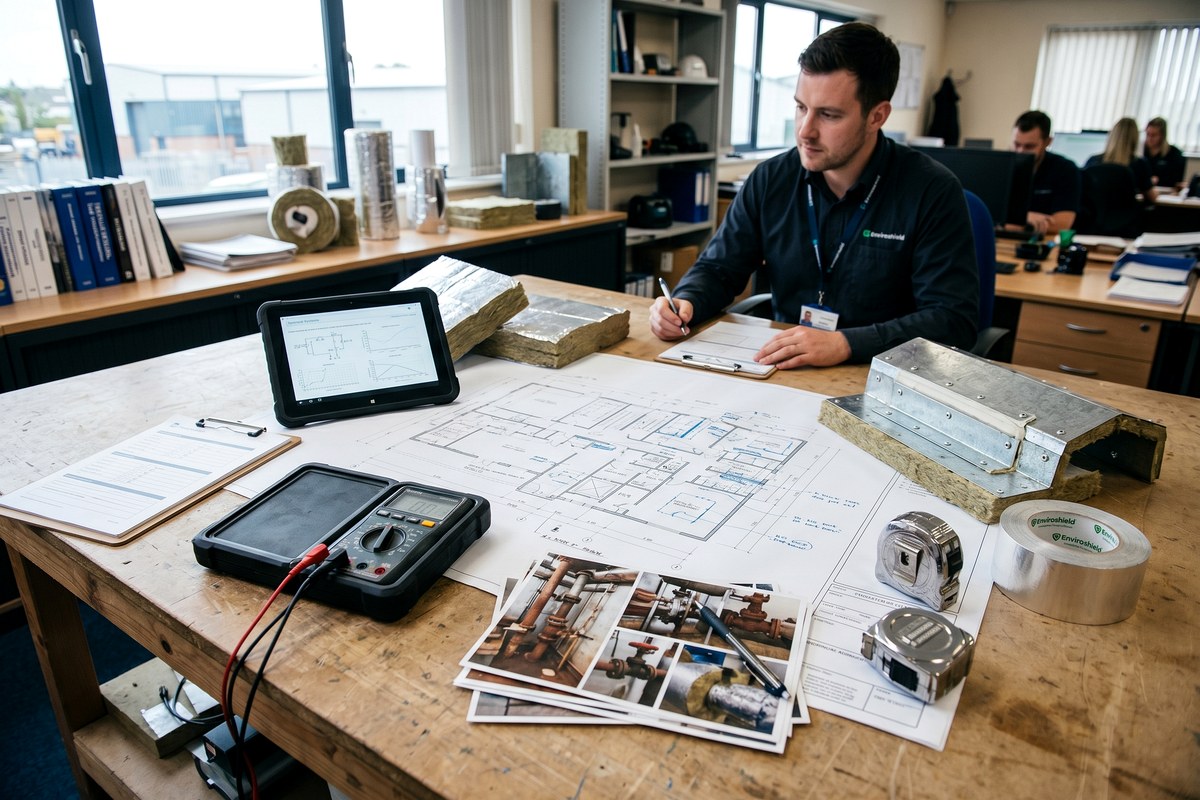
Start with the documents and photos you already have. A marked-up drawing, a few site photographs, service descriptions, operating temperatures and a rough programme are usually enough for Enviroshield to advise on next steps or review a package before you send project details for formal pricing.
Useful details for a first insulation review
- Pipe sizes, service temperatures and whether the route is internal, external or part of a plant room.
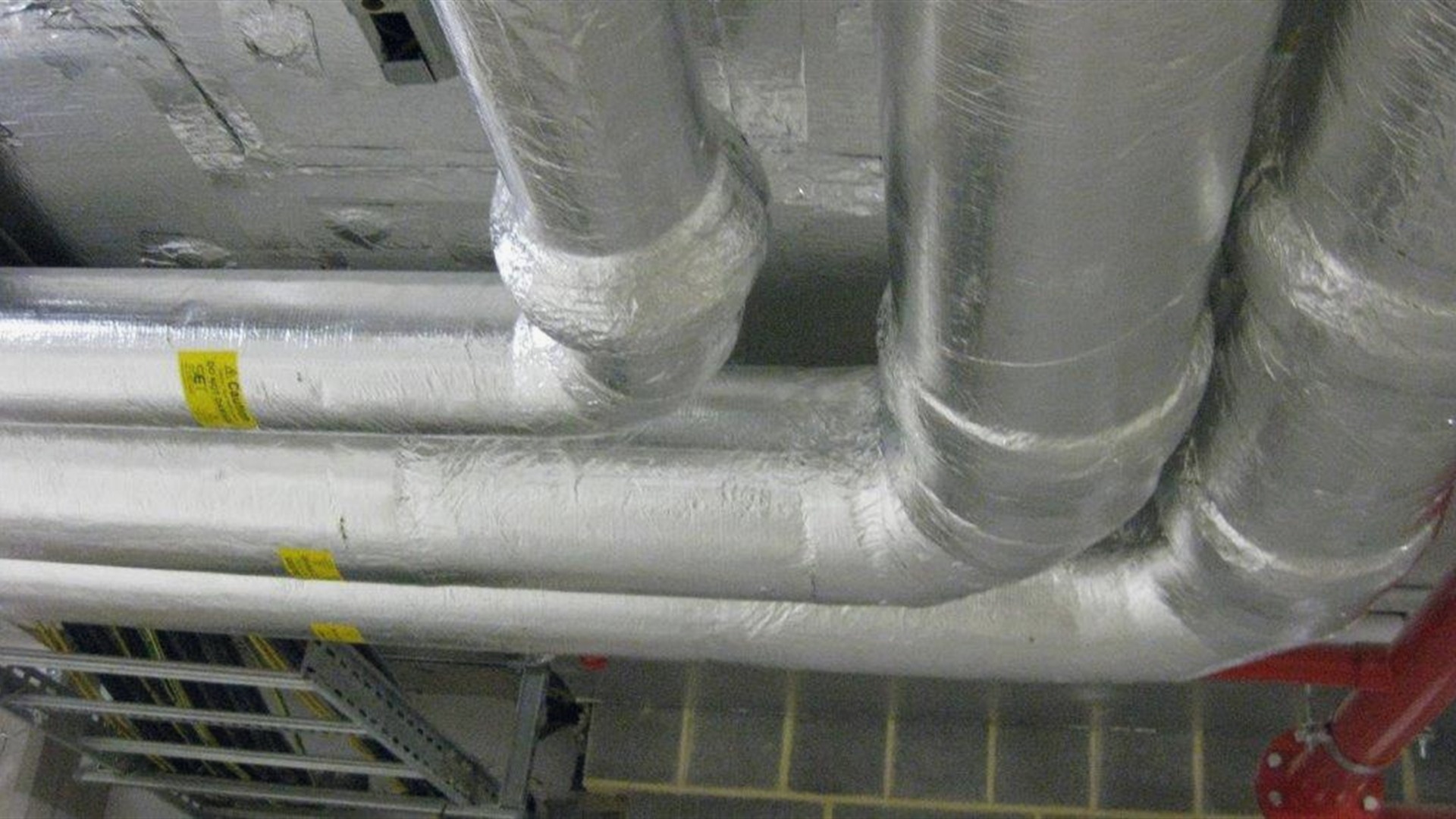
- Photos showing valves, flanges, pumps, strainers, ductwork, vessels or awkward access points.
- Any drawings, builders work openings, service schedules or marked-up plans already in circulation.
- Finish expectations such as aluminium cladding, colour-matched sheets or hygiene-led specifications.
- Programme restrictions, shutdown windows, permits and live-environment constraints that affect installation.
A good insulation enquiry is specific enough to show the problem, even if the full package is still developing.
Do you always need a survey before pricing?
Not always. Many jobs can start with a desktop review when the photo set and drawings are clear. A survey becomes more important where access is tight, plant rooms are congested, multiple trades are involved, or the package combines insulation with protective cladding, specialist access points or the kind of live-site sequencing shown in our project updates.
What is included in a commercial insulation installation quote?
Start with the installation scope: the services and components to be insulated, measured quantities, material and thickness requirements, protective finishes, maintenance access and the working programme. Ask which removal, access, reinstatement and handover items are included or excluded. Enviroshield's commercial thermal-insulation service covers project installation enquiries; send drawings or photographs with the brief.
How are insulation material and thickness selected?
Selection depends on the service duty, operating and surrounding conditions, the chosen product's properties and the project specification. The DESNZ pipework-insulation criteria distinguish hot-service heat loss from cold-service heat gain and include fittings. They are scheme criteria, not a universal thickness rule or an Enviroshield accreditation. See our pipework insulation guide for the project details to establish before installation.
Can insulation be planned around valves and maintenance access?
Yes. Identify valves, flanges, strainers and inspection points in the scope so the access detail is planned before installation. Removable valve jackets can be considered where suitable. For cold services, the specified insulation and vapour-resistant detail must also be reinstated after access; see chilled-water pipework support.
Can you promise a fixed energy saving or payback period?
A credible estimate needs the measured scope, current condition, operating hours, temperatures, proposed specification and a stated cost basis. A general percentage or a successful installation is not evidence of an actual site saving. Our insulation payback guide explains the calculation and its inputs; the plant-room survey guide explains the measured brief.
For a commercial installation enquiry, send your project information and mark unknown dimensions, conditions or access requirements clearly so they can be reviewed.