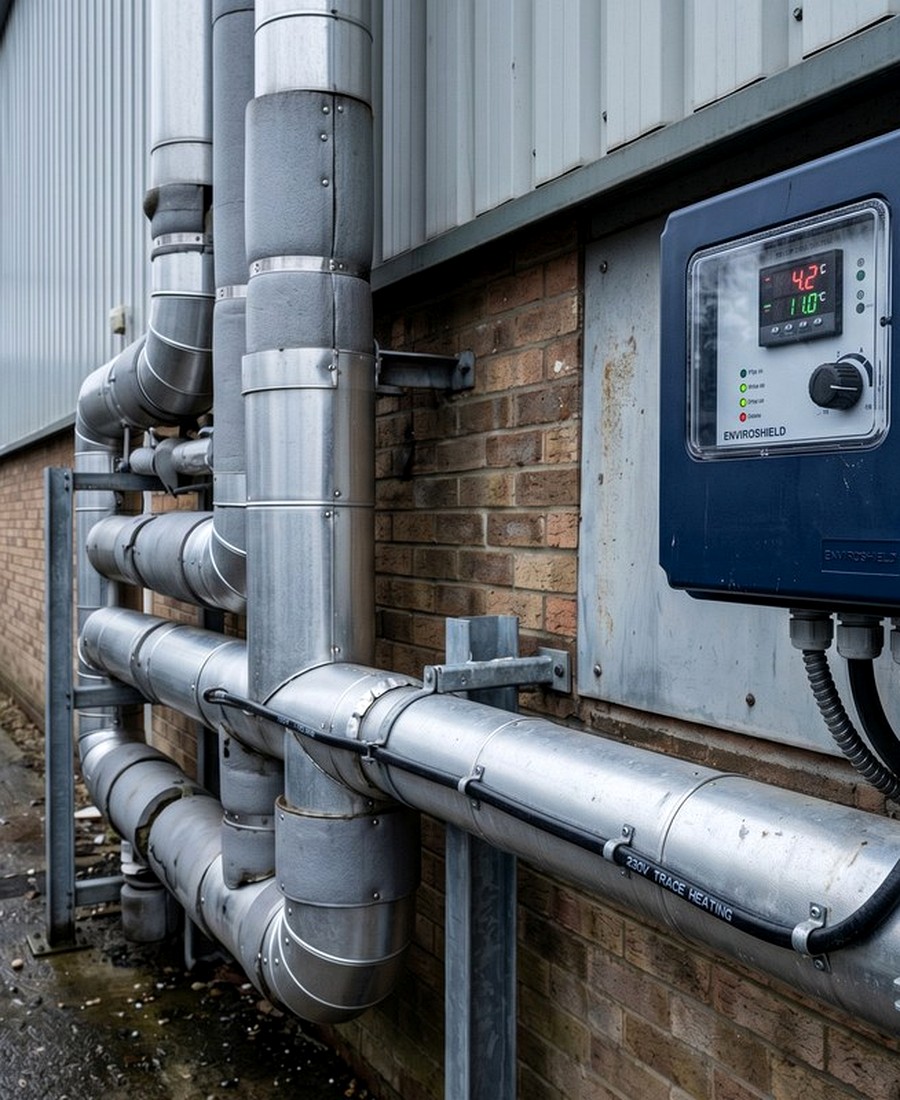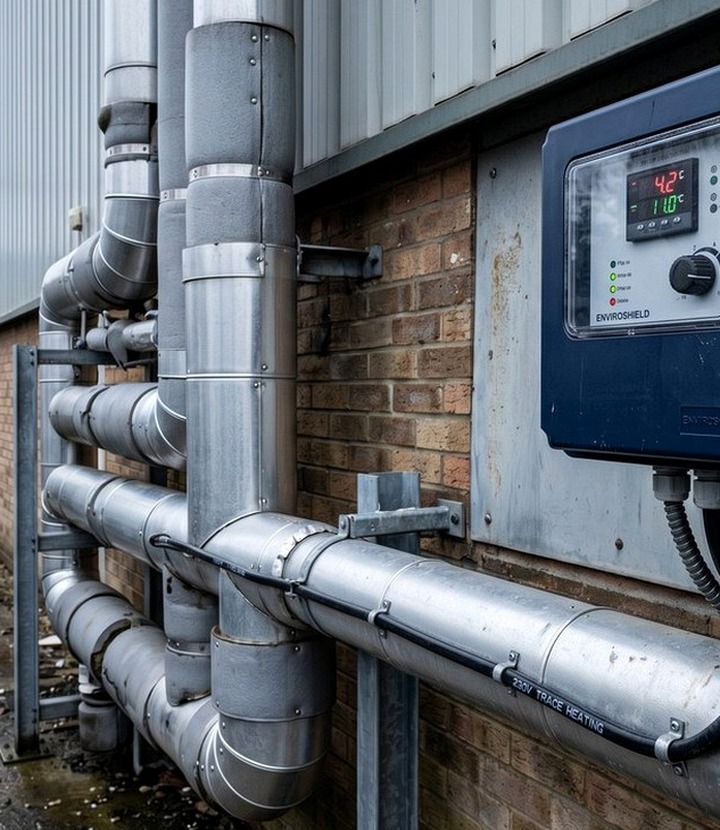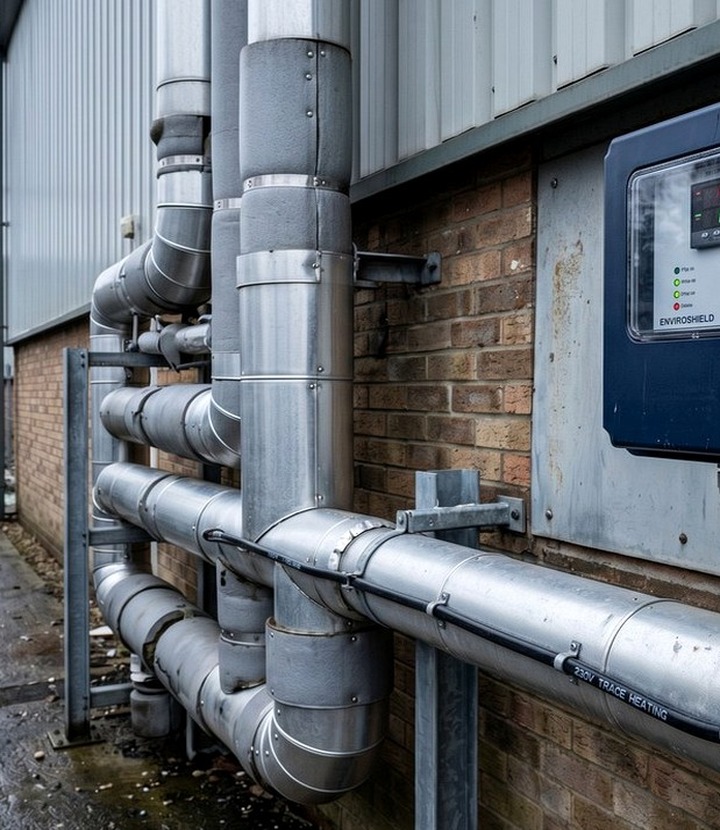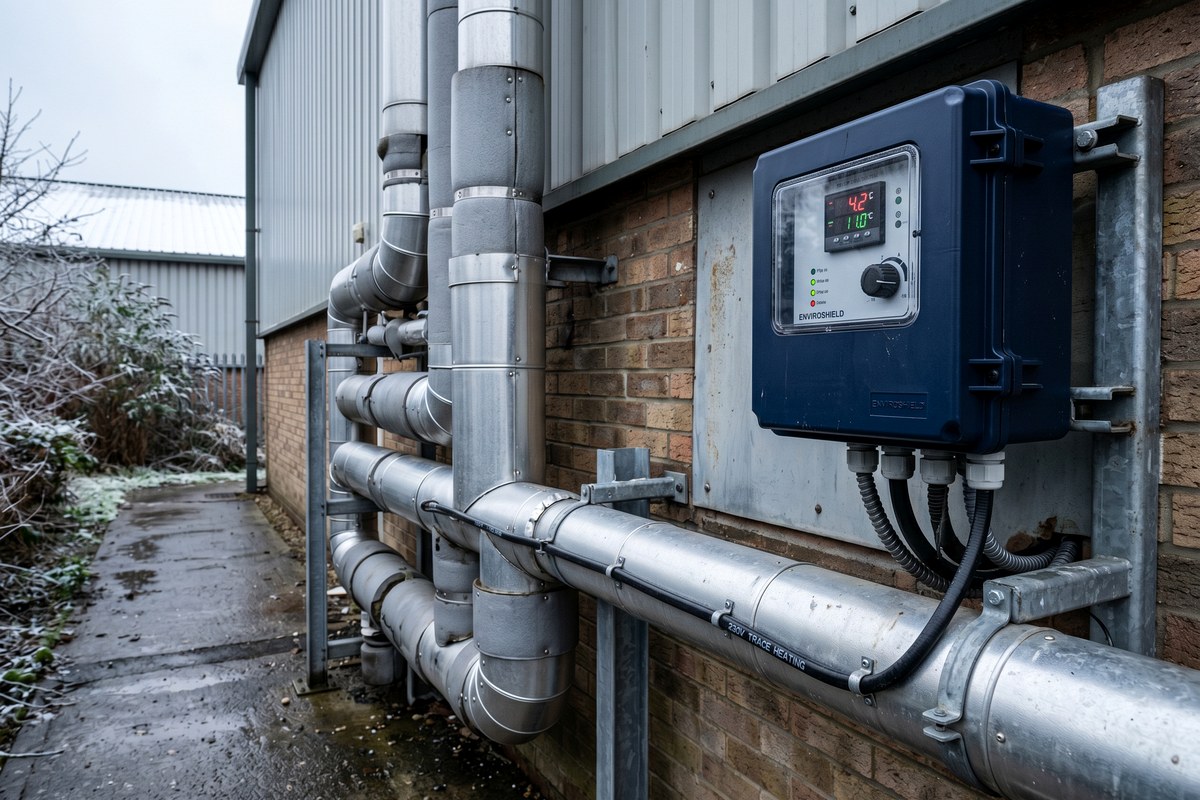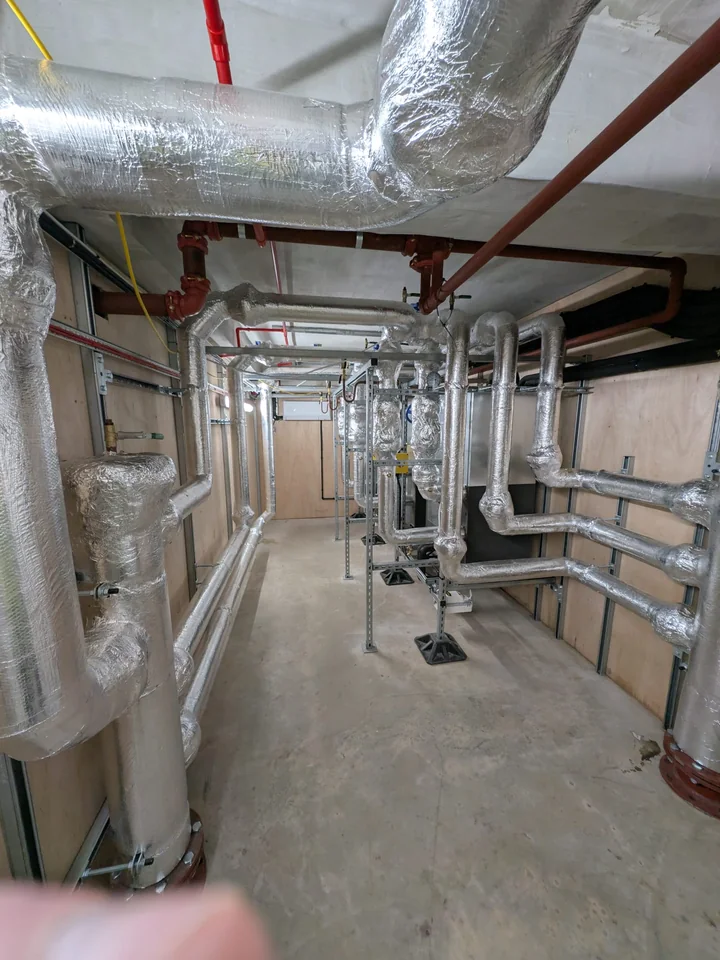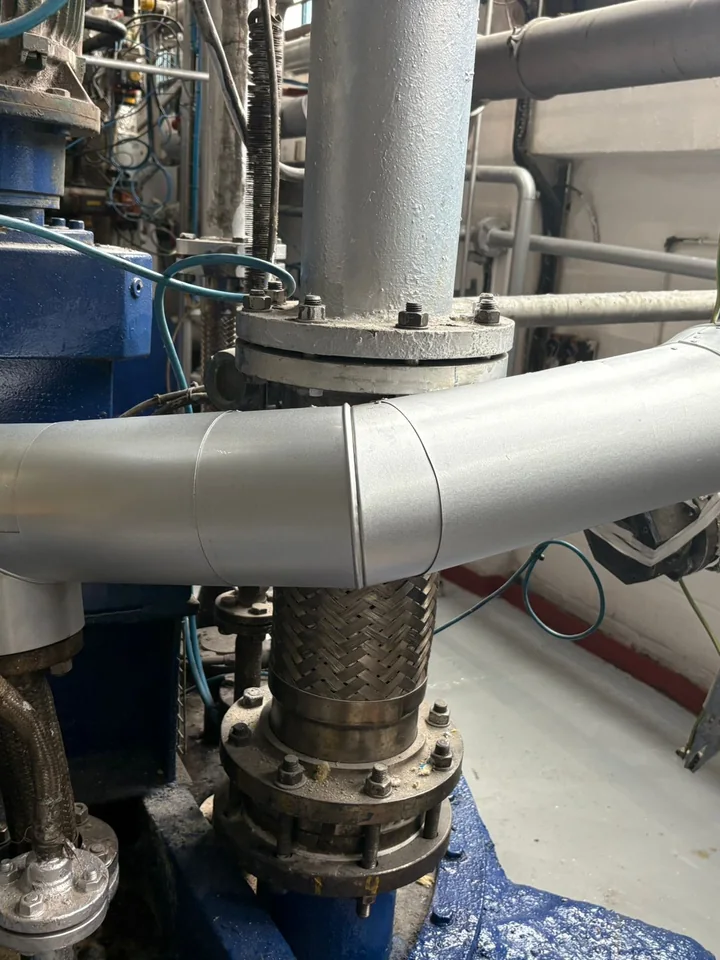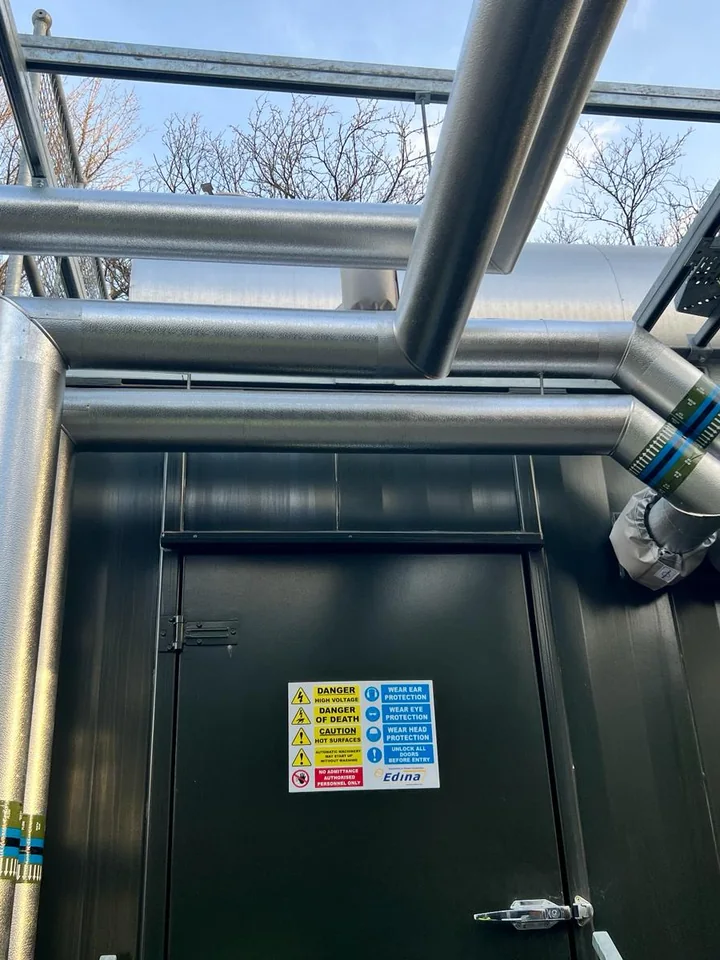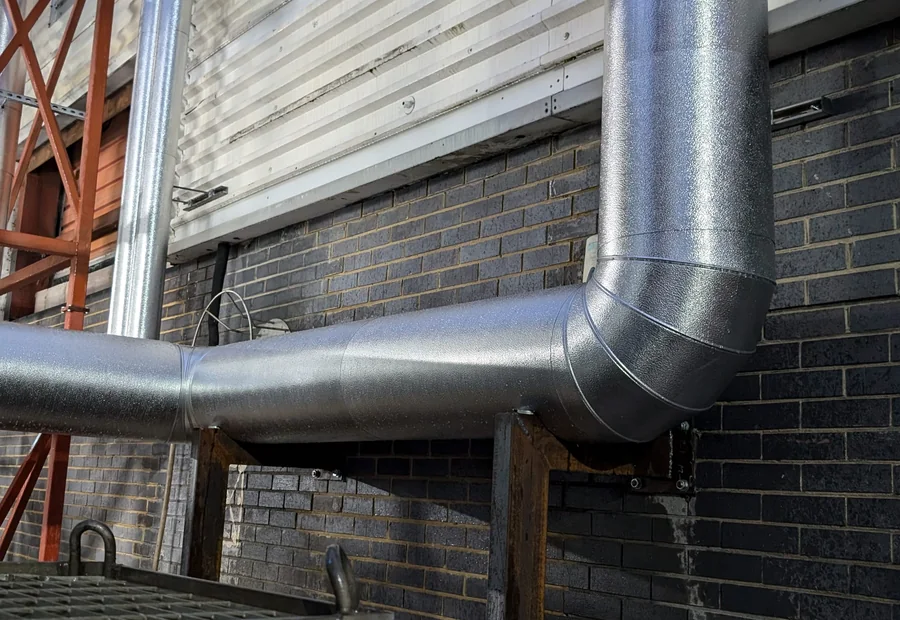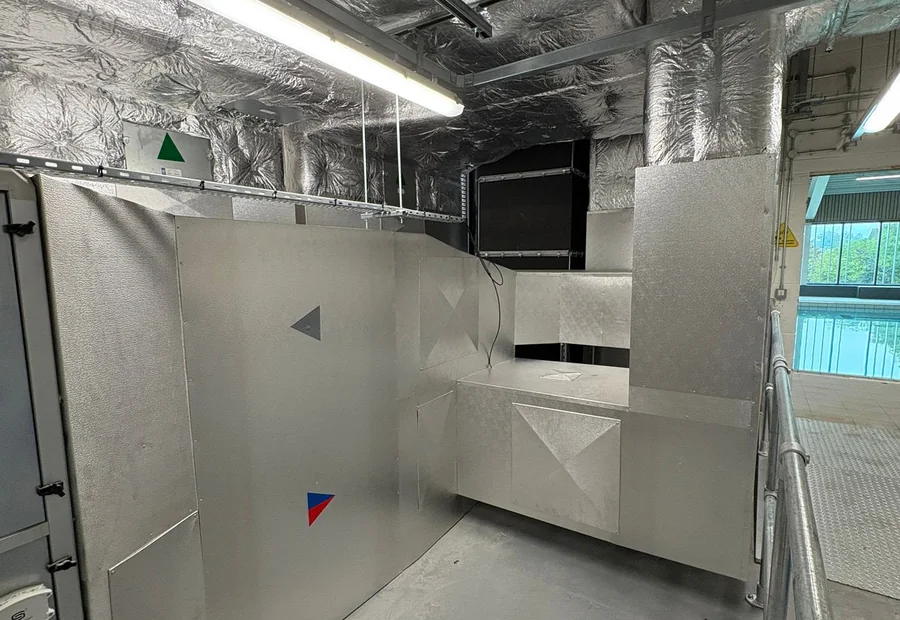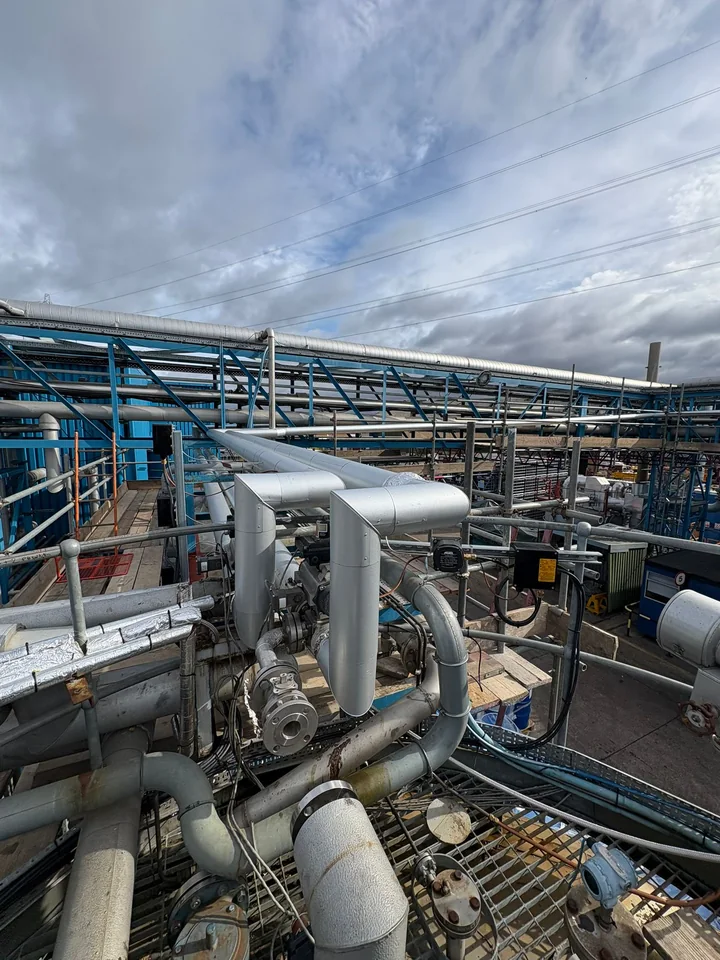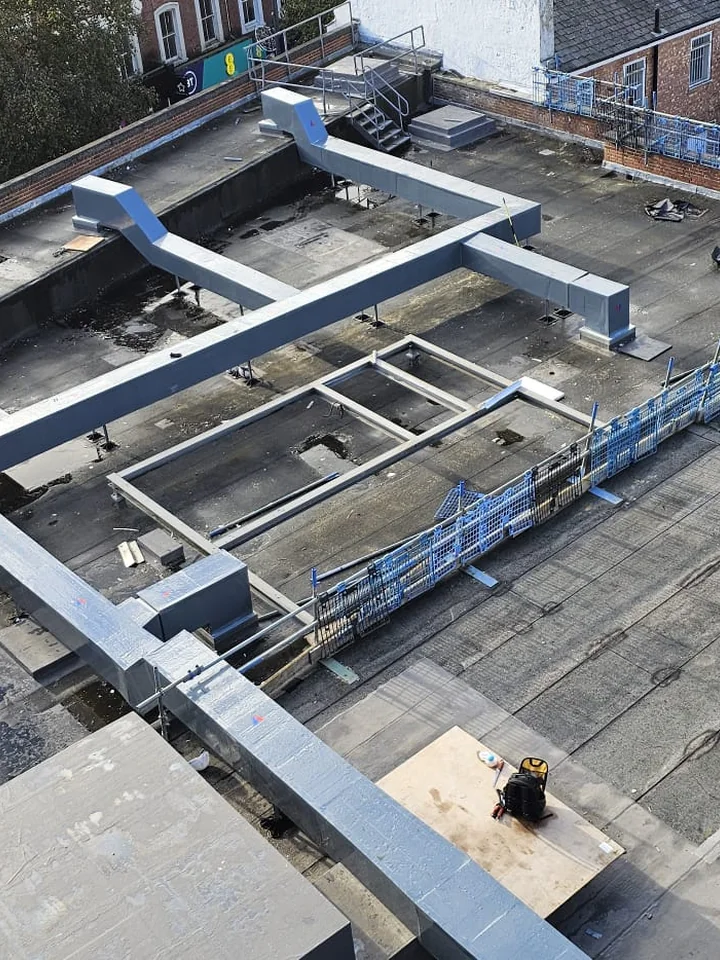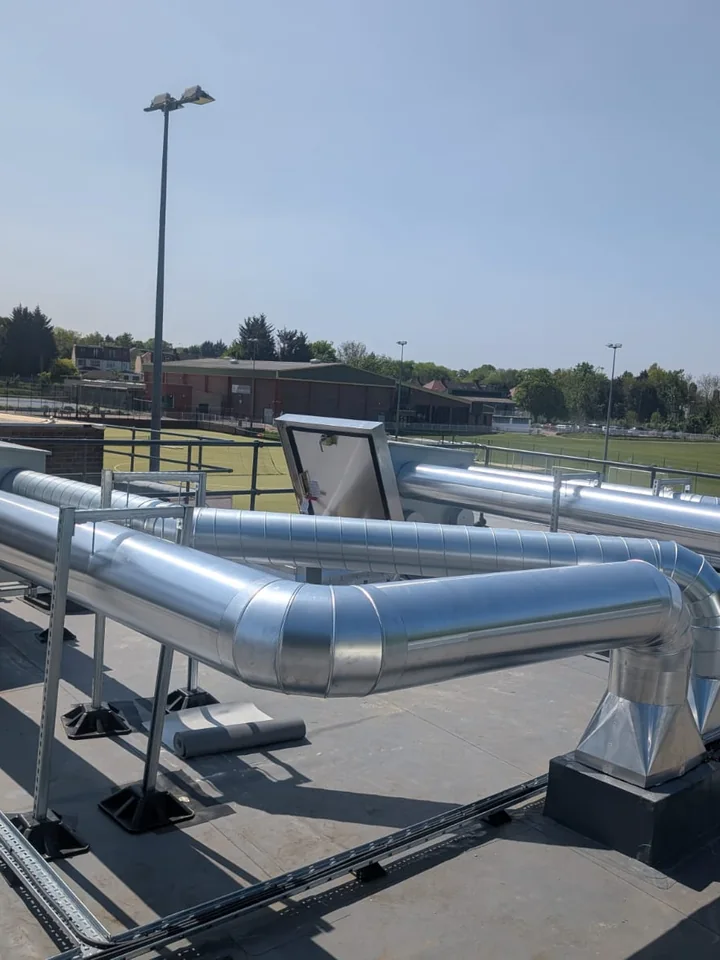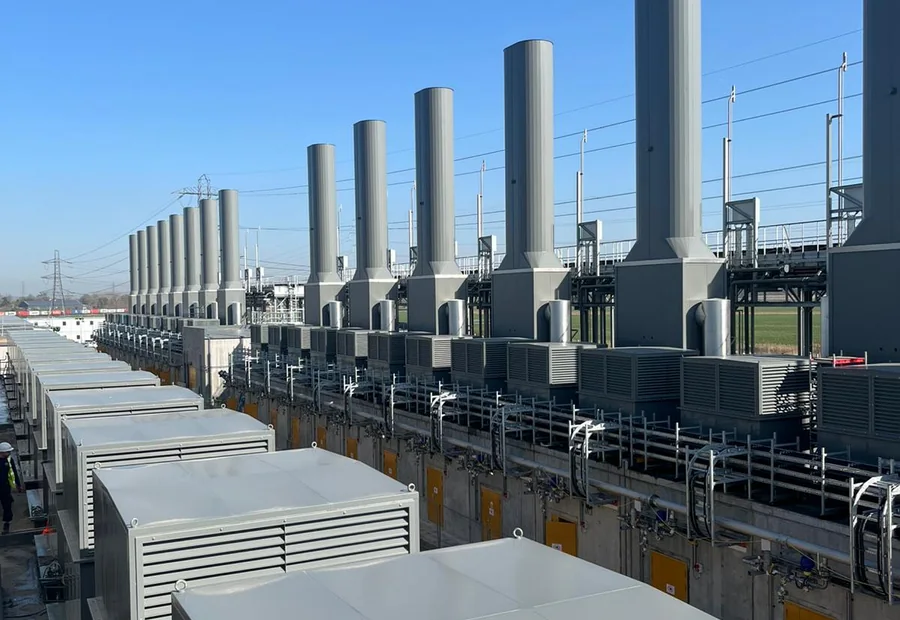
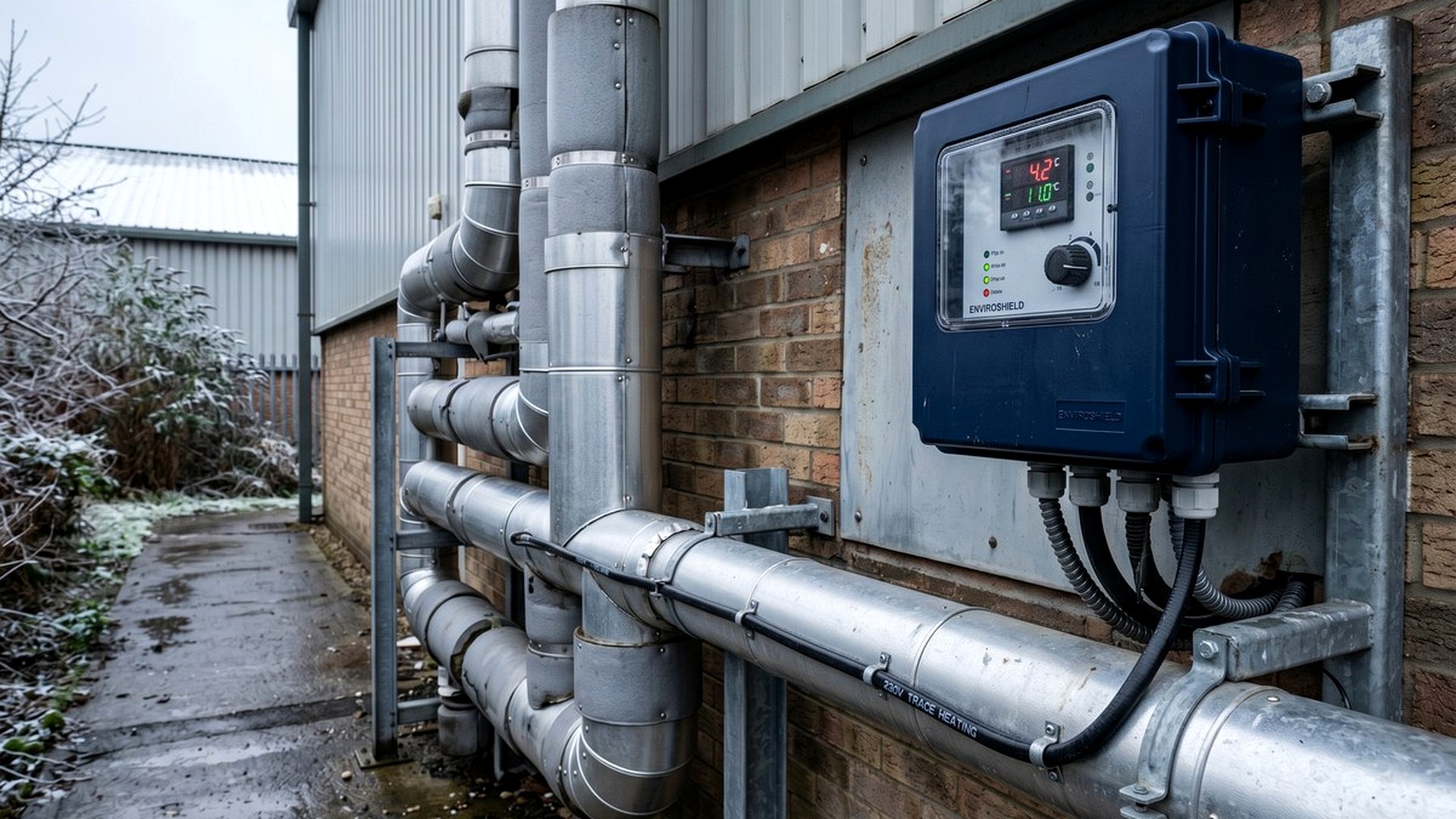

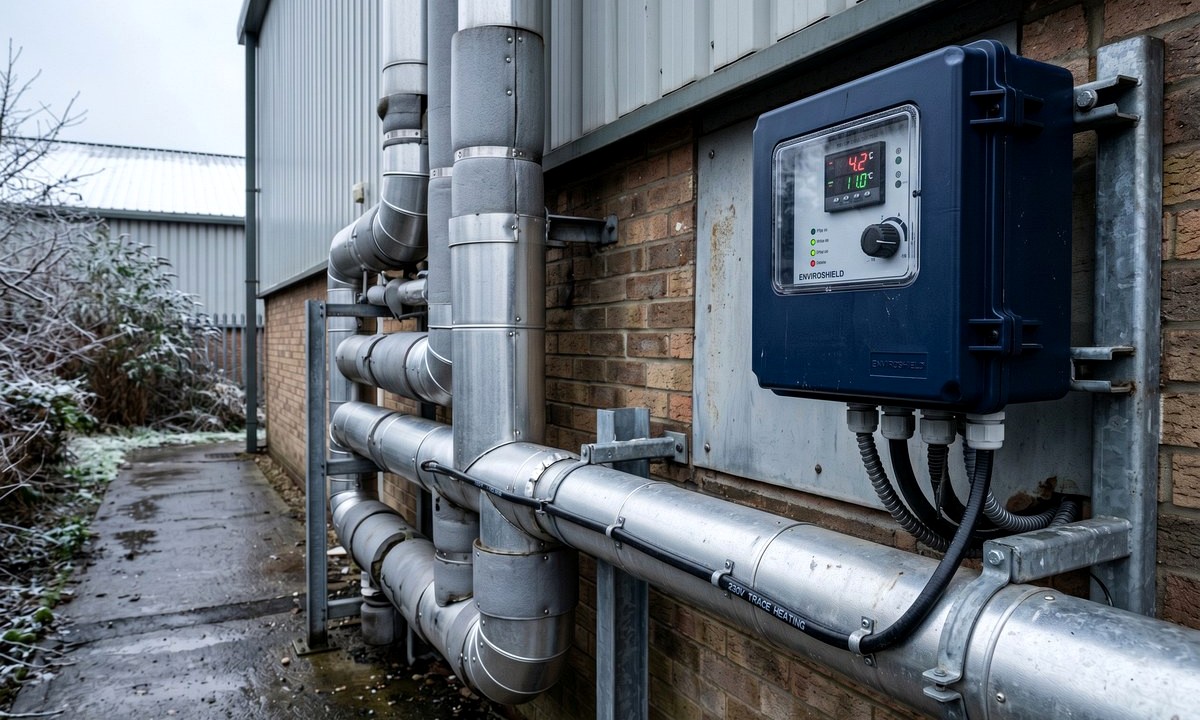
Commercial and industrial frost protection trace heating for exposed pipework, vulnerable valves, condensate runs and winter-critical services that cannot be left to freeze.
Freeze damage rarely starts in the easy sections. Enviroshield looks at exposed branches, small bores, valves, low-flow sections and difficult roof-level routes before a frost protection package is specified.
What determines a frost-protection trace-heating specification?
The starting point is the service that needs protection and the conditions along its route. Cable selection cannot be settled from pipe length alone: pipe size and material, the required maintained temperature, design ambient conditions, insulation and supply arrangements all need to be considered together.
Information to send with your project enquiry
- Site location, exposed or unheated sections and the service carried by each pipe.
- Pipe sizes, materials, route lengths, valves, branches and other components needing protection.
- Required maintained temperature and any specified minimum design ambient temperature; mark these as unknown if not established.
- Existing insulation type, thickness and condition, plus weatherproof finish requirements.
- Available electrical supply and controls information, access constraints and the installation programme.
Plan the insulation and controls as part of the system
Heating cable supplies heat; suitable insulation limits heat loss. Damaged or wet insulation and incomplete weatherproofing should be included in the review. The RAYCHEM manual, sections 6 and 9, explains the insulation and maintenance requirements for the systems it covers. Electrical installation and testing should be planned for competent personnel following the installed equipment's instructions.
For an existing system, start with trace-heating surveys and maintenance and our pre-winter checks guide. For new installation, send the frost-protection project brief so the cable, insulation, controls and access scope can be reviewed together.
Frost Protection Trace Heating Planned Around the Real Route
Enviroshield looks at exposure, service duty, controls, insulation and handover detail before recommending the right trace heating route.
Freeze-Risk Mapping
Identify which services, branches and exposed locations are most vulnerable when temperatures drop.
Pipe & Valve Protection
Protect vulnerable pipework, valves, short branches and plant connections that can freeze first.
Control Settings
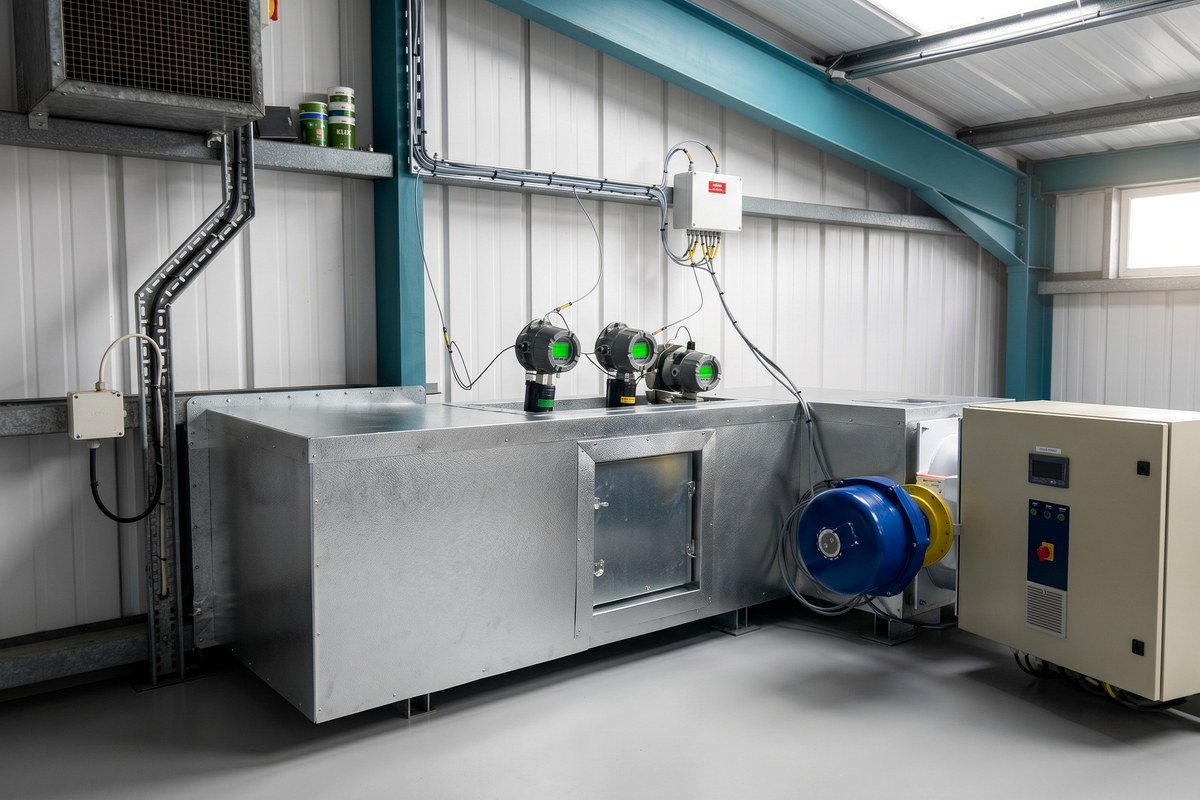
Set up controls and switching so frost protection operates where it is needed, not just where it is easy.
Finished External Routes
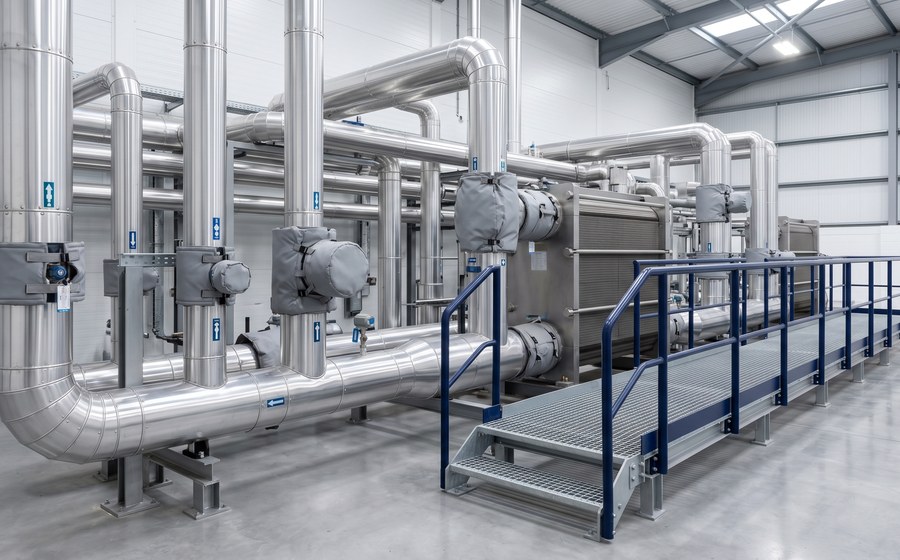
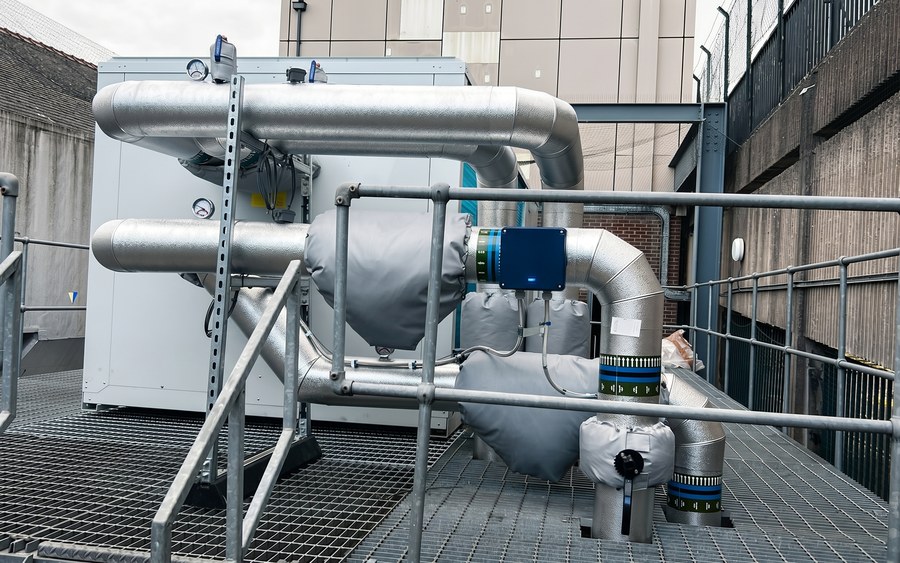
Coordinate trace heating with insulation and weather-resistant finishes on exposed services.
Where Enviroshield Supports Frost Protection Trace Heating
Trace heating is normally planned around the parts of the service route where exposure, continuity, route length or winter pressure create the biggest operational risk.
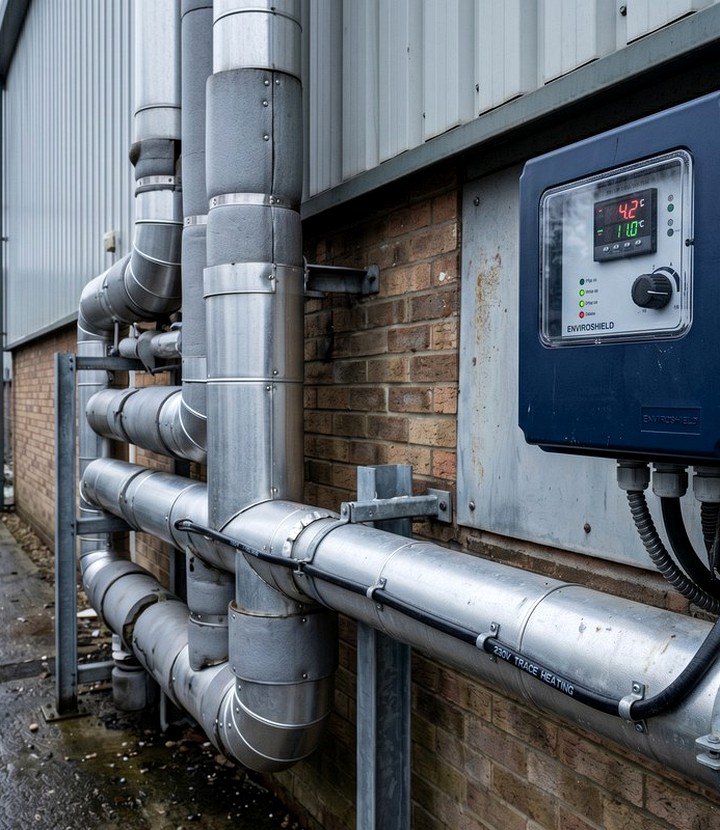
External Pipework
Roof plant, perimeter pipework and exposed service bridges where cold air and wind increase freeze risk.
Valves, Pumps & Small Bores
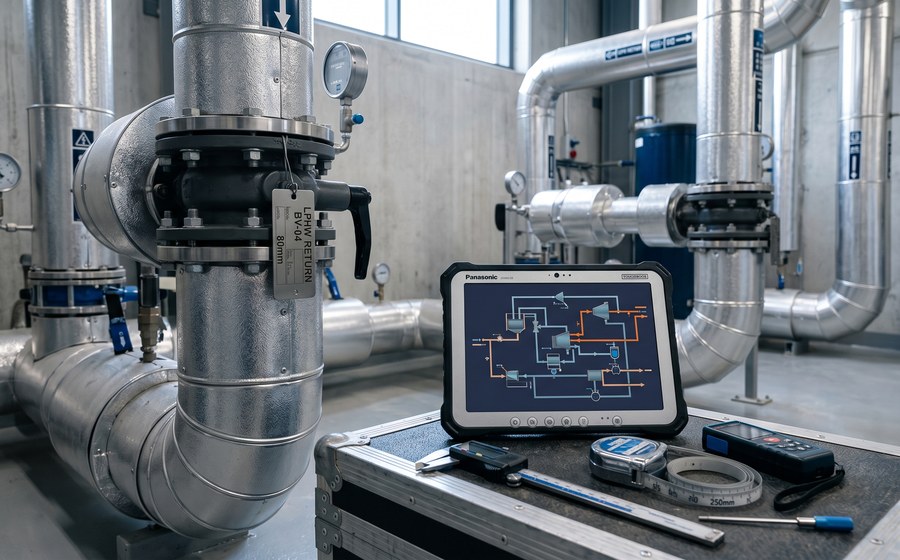
Short branches, condensate runs and valve sets that can freeze before the main route shows a problem.
Unheated Service Areas
Compounds, service yards, roof voids or other low-temperature areas where vulnerable routes need protection.
Weather-Exposed Finishes
Frost protection coordinated with insulation and protective finishes so the full route stays reliable.